

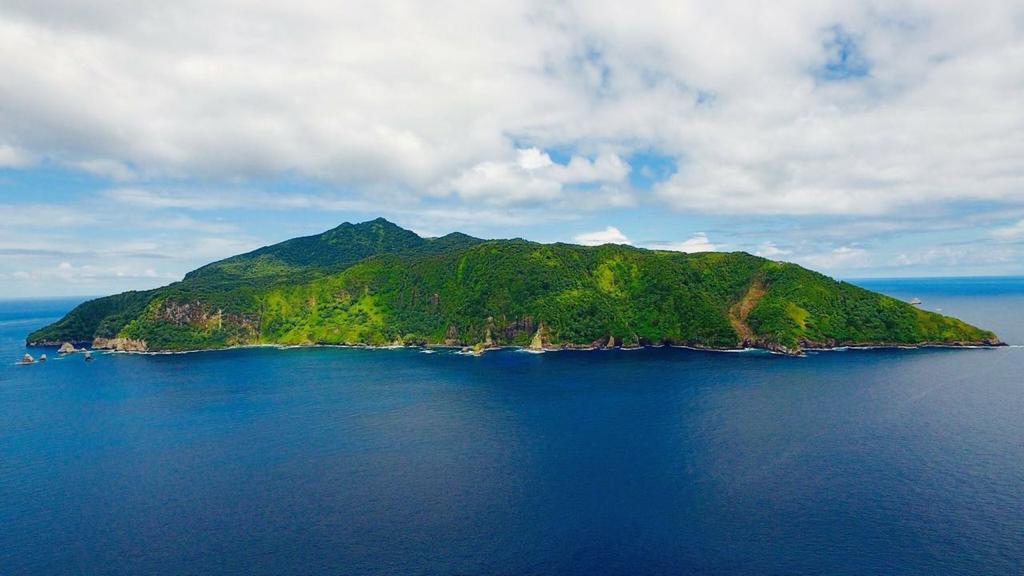
Costa Rica has added Isla del Coco to its national seismic monitoring network for the first time, giving scientists a new permanent observation point in one of our country’s most remote territories. The Volcanological and Seismological Observatory of Costa Rica at the National University (OVSICORI), installed the first permanent seismic station on the island, and put it far out in the Pacific Ocean southwest of the mainland.
The new station, identified as ISCO, will help researchers record ground movement, improve the location of earthquake epicenters and collect better data from a part of the country that has long been difficult to monitor. The station gives Costa Rica stronger coverage over the Pacific side of its seismic network, especially near the subduction zone off the country’s coast. That is where tectonic activity can generate earthquakes that affect coastal communities, marine areas and, in some cases, the Central Valley.
For researchers, the value is partly geographic. Most seismic stations are located on the mainland. Isla del Coco, about 550 kilometers off Costa Rica’s Pacific coast, offers a rare monitoring point in open ocean territory. That location helps scientists triangulate seismic events with greater precision, especially those that occur southwest of Costa Rica or elsewhere in the eastern Pacific.
The new equipment is highly sensitive and can detect small vibrations in the ground, including activity caused by earthquakes as well as natural background noise such as waves, wind and rain. That sensitivity allows researchers to separate seismic signals from ordinary environmental movement and better identify where an earthquake occurred.
The station has already produced useful data. Shortly after installation, it registered a magnitude 5.3 earthquake near the Osa Peninsula, as well as a magnitude 4.8 earthquake in El Salvador. Those early readings showed how the station can contribute to regional monitoring, not only for Costa Rica but also for seismic activity elsewhere in Central America and the eastern Pacific.
The project also includes a GNSS station, a more advanced version of GPS technology that uses satellite data to measure small changes in position. That will allow scientists to monitor how Isla del Coco moves over time and study slow deformation in the Earth’s crust.
That kind of data is important in a country shaped by active tectonic plates. Costa Rica sits in a seismically active region, and while earthquakes cannot be predicted, better monitoring gives researchers a clearer picture of how stress builds and shifts underground.
For the public, the station does not mean earthquakes can be forecast in advance. Its purpose is to improve detection, location and scientific understanding. More complete data can help OVSICORI refine earthquake reports, strengthen long-term research and improve the national record of seismic activity.
The installation also expands Costa Rica’s scientific presence on Isla del Coco, one of the country’s most protected and remote territories. The island is best known internationally as a national park and UNESCO World Heritage Site, but its location also makes it valuable for geologic and oceanic research.
By placing a permanent station there, Costa Rica now has a stronger window into seismic activity across a wider stretch of the Pacific. For a country where earthquakes are part of life, that added coverage matters.





