
The United States on Wednesday charged former Cuban President Raúl Castro over the 1996 shootdown of two small aircraft, marking the first time a senior figure from the communist regime has been accused before the courts of its neighboring enemy. Castro is accused of murder, conspiracy to kill U.S. citizens, and destruction of aircraft in connection with the deaths of four people.
The charges represent a new escalation in Washington’s intense pressure campaign against the communist island, which has been under a U.S. embargo since 1962 and is now devastated by a severe economic crisis. Raúl Castro, now 94, was Cuba’s defense minister in 1996.
“This is a political action, with no legal foundation, whose only purpose is to add to the file they are fabricating to justify the madness of a military aggression against Cuba,” Cuban President Miguel Díaz-Canel wrote on X.
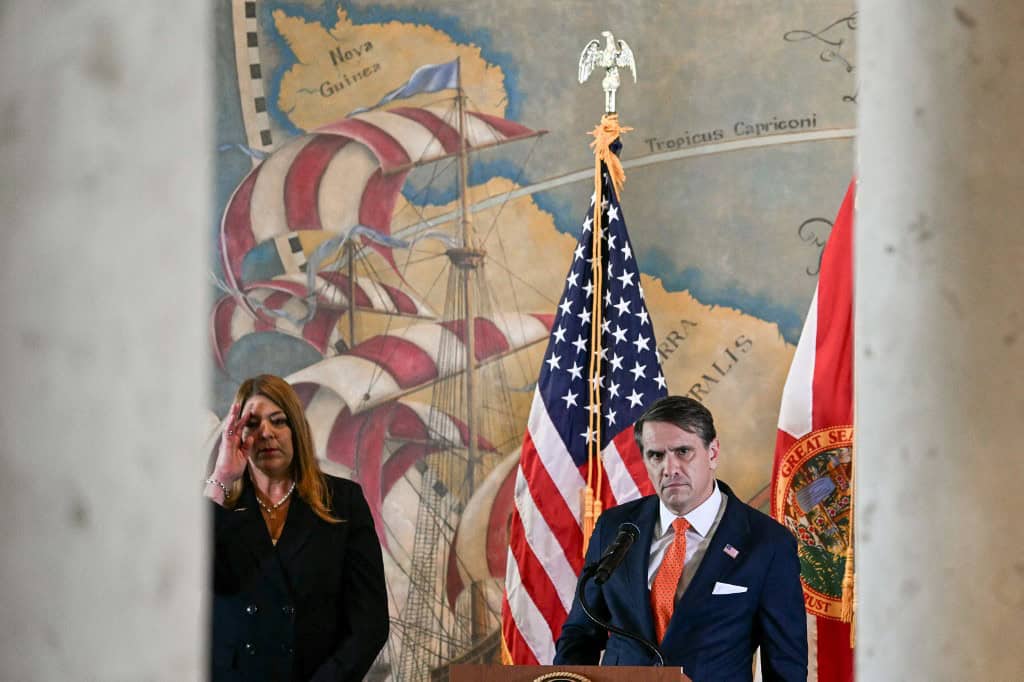
“The United States does not forget its citizens,” Attorney General Todd Blanche declared at a news conference in Miami before members of the Cuban-American community. Washington hopes Castro will eventually end up behind bars, he added.
You Don’t Play Around With President Trump
On February 24, 1996, two Cuban MiG fighter jets pursued and shot down two unarmed aircraft belonging to “Brothers to the Rescue” over the Florida Straits, killing all four crew members. The organization’s mission was to help Cuban rafters reach Florida. A third aircraft, carrying the group’s leader, José Basulto, narrowly escaped.
Cuba acted at the time “in legitimate defense, within its jurisdictional waters,” the Cuban president said in his post on X. The planes fell in international waters. The case has been pursued for decades with determination by the Cuban-American community in Florida, one of President Donald Trump’s electoral strongholds.
“I think the indictment is good and very fair. The people have suffered a lot. The people need freedom, and those who need to fall must fall,” Francys Fabelo, a 67-year-old writer, told AFP at Miami’s historic Versailles restaurant. “You don’t play around with President Trump. We hope, the Cuban people hope, that this is serious,” he added.
An Offer of Peace
Trump alternates threats with offers of dialogue with the island, as he previously did with Venezuela, where he overthrew and took President Nicolás Maduro away to stand trial. U.S. Secretary of State Marco Rubio had earlier offered a “new relationship” between his country and Cuba in a special Spanish-language video message.
That new relationship “has to be directly with you, the Cuban people,” the secretary of state said. On January 29, Trump signed an executive order threatening to impose tariffs on countries that sell oil to Cuba, effectively leaving the island without fuel. Havana acknowledges that it no longer has reserves to meet every day needs.
The United States is now offering $100 million in food and medicine, to be distributed directly to the Cuban people through the Catholic Church or another charitable group. In his message, Rubio denounced repression and also referred to the blackouts suffered by Cubans. “The reason you are forced to survive 22 hours a day without electricity is not because of an oil blockade by the United States,” he said.
“The real reason you have no electricity, fuel or food is because those who control your country have looted billions of dollars, but none of it has been used to help the people,” argued Rubio, who is of Cuban origin. He recalled that three decades ago Raúl Castro founded a company called GAESA, which is “owned by the armed forces” and, he said, “has revenues three times greater than the budget of your current government.”
Raúl Castro, who succeeded his brother Fidel as president of Cuba, carried out a historic rapprochement with the United States in 2015 under President Barack Obama, which Trump later challenged.
May 20
All of these announcements came on May 20, historically the day the Republic of Cuba was declared in 1902, after independence from Spain and the end of the U.S. military occupation.
The island’s communist government prioritizes other dates in its historical narrative, such as the triumph of the Castro revolution on January 1, 1959, because it considers that after 1902 the island remained under Washington’s de facto control because of the Platt Amendment.
“Intervention, interference, plunder, frustration. That is what May 20 means in Cuban history,” Cuban President Miguel Díaz-Canel reacted on X. The Platt Amendment, included in Cuba’s first Constitution, authorized the United States to intervene in case of a threat to Cuban sovereignty, although that explanation is rejected by the regime that emerged from the 1959 revolution.