
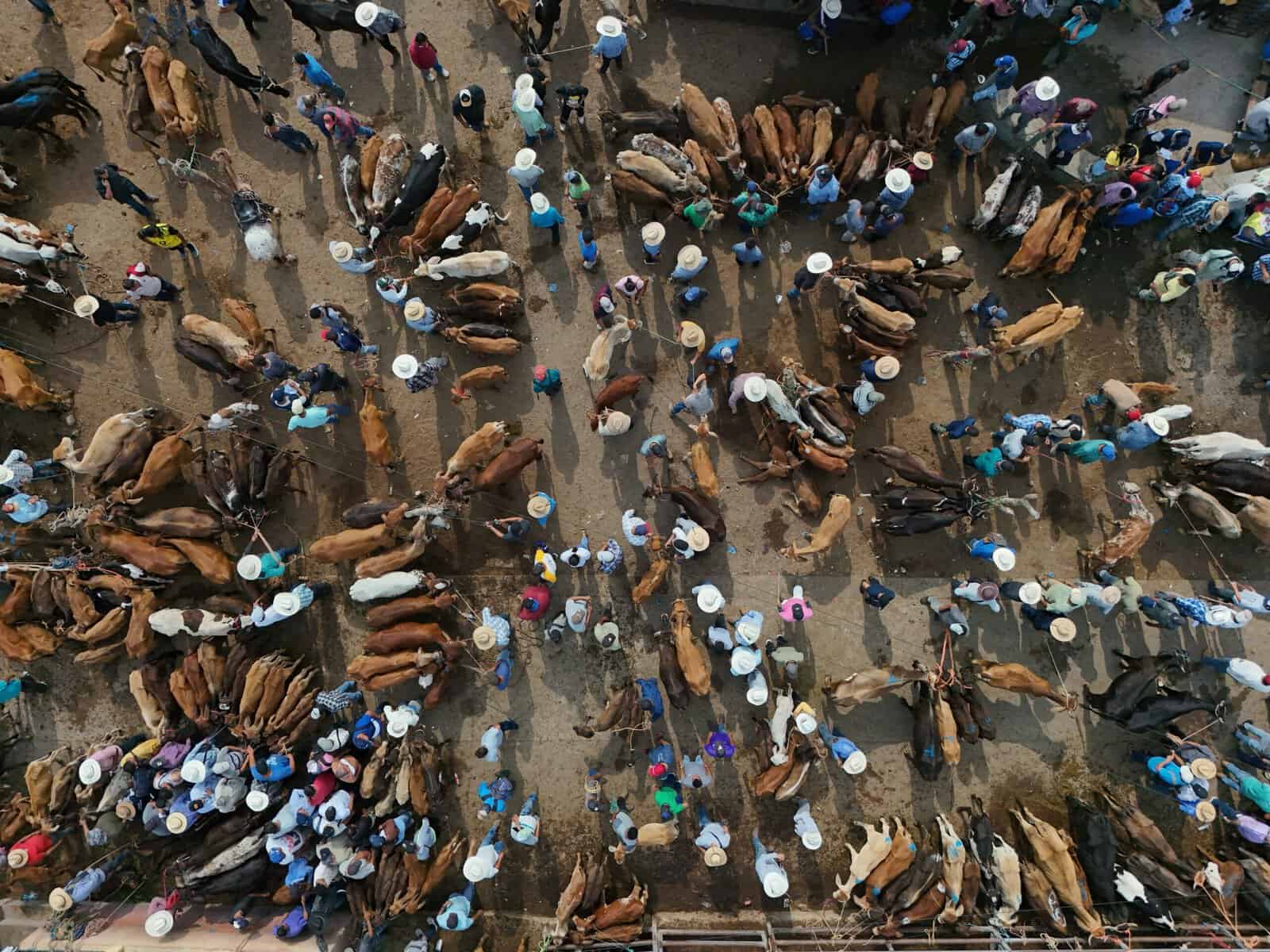
A rooster announces the start of the day at the San Rafael Cedros market, about 50 kilometers from San Salvador, where every weekend sellers and buyers plunge into a lively trade in livestock and farm animals. In this traditional space, roughly the size of two soccer fields, cattle, horses, pigs, rabbits, birds, and goats are bought and sold. Unlike other businesses, there are no banks, credit cards, or electronic transfers here: cold hard cash is the only legal tender. That, or barter.
“We use pure cash, no transactions or bank accounts, because we count it right away. If something is missing, it has to be made up,” explains Domar Argueta, a 28-year-old trader. Wearing a hat and checkered shirt, like most of those dressed for the occasion, he arrived with three head of cattle and left with a wad of cash in his hand, bill after bill.
A bull can cost around $3,000, while cows range from $600 to $1,000. The movement of large sums of cash no longer sparks the same fear it did in years past, when gangs imposed their own law. Armando Sequeira has spent more than five decades as a “corretero,” the local term for those who buy and sell cattle in these popular markets known as “tiangues.”
Years ago, gang members killed one of Sequeira’s sons. Now 74, the trader says he was robbed about 20 times. “Before, by eight in the morning you couldn’t do business here because the gang members were waiting for you. Now you can breathe easier,” Sequeira says.
The feverish activity of the “tiangue” has encouraged some people to enter a trade they knew little about. Carlos Barrera, who returned last year after self-deporting from Los Angeles, decided to invest the savings he had earned in the United States. “Because of my age, there are no factory jobs here. A brother-in-law of mine worked with cattle, and we started together,” he says.
Although men dominate the market, women also take an active role. Carmen Carpio, who has two decades of experience selling pigs, says the business depends on skill and good judgment when investing. “The important thing here is to keep the money moving. If you have money, you invest it in pigs, goats, or cattle, then you buy and sell them. That is our business,” she says.
Amid crowing and mooing, sellers and buyers trade around 700 head of cattle every Saturday in this bustling market, which, according to the local government, is one of the largest in El Salvador and one of the main sources of income for San Rafael Cedros.