

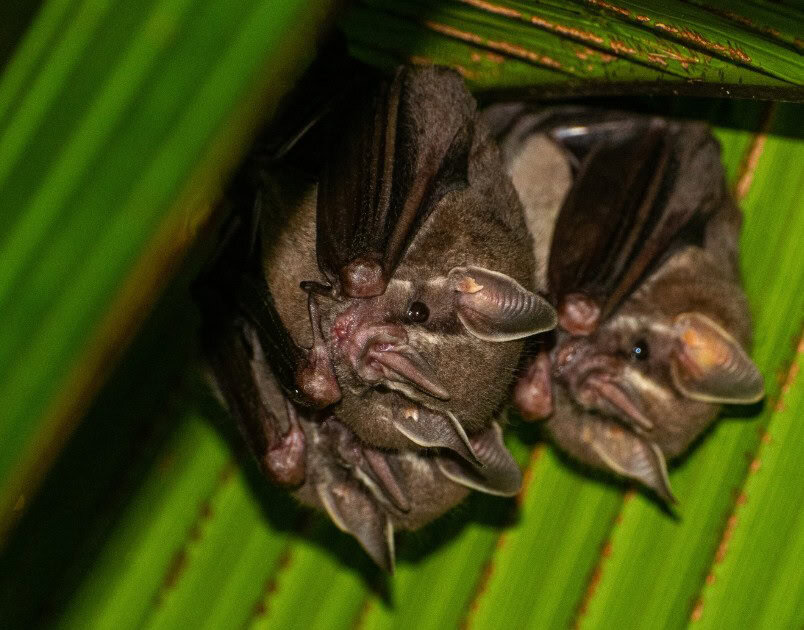
A Costa Rican documentary short about leaf-cutting bats has earned a spot in the international competition at the Santiago Wild Film Festival, Latin America’s leading event for nature and wildlife cinema.
Leaf Architects will screen in the Nature Stories category, which features scientific takes on wildlife told through fresh approaches. The 20-minute film, completed in June 2025, follows biologist Bernal Rodríguez Herrera as he studies tent-making bats that reshape living leaves into shelters.
The nomination was announced this week. The festival runs its main program in Santiago, Chile, in May 2026, with screenings and awards that draw global attention to environmental storytelling from the region.
The production centers on murciélagos tienderos, a group of leaf-nosed bats that use their teeth and claws to cut precise patterns around leaf veins. The structures protect the animals from rain, wind and predators during daylight hours when they sleep. At least 22 species across Central and South America build these living tents from more than 77 plant species.
Rodríguez Herrera, a mammal biologist and professor at the University of Costa Rica, has spent more than 20 years researching these bats. The film grew directly from his doctoral thesis and traces how his career became intertwined with the animals he studies. It captures behaviors filmed for the first time, including the delicate construction techniques and the bats’ role in forest regeneration through seed dispersal under their roosts.
Rodrigo Medellín, a biologist at the Institute of Ecology at the National Autonomous University of Mexico, narrates the documentary. Medellín has collaborated with Rodríguez Herrera on bat research across the region.
Emi Kondo, a Costa Rican-Japanese National Geographic Explorer and co-founder of production company Botánica Films, co-directed the film with Thomas Poole, who also served as director of photography. Botánica Films, based in San José and Bristol, England, produced the short. The National Geographic Society provided funding, and the team shot in the Costa Rican Caribbean. Eight National Geographic Explorers and various Latin American collaborators took part.
“Filming the tiendero bats was a magical experience,” Poole said. “They’re tiny, but their creativity surprises and shows how nature finds ingenious ways to adapt.” The project highlights scientific work from Latin America. Rodríguez Herrera has expanded knowledge of these bat species across multiple countries in the region. He also serves as an executive producer alongside Medellín.
“I believe there are groups that people, in general, are afraid of, and bats are one of them,” Rodríguez Herrera said. “However, that fear is unfounded. When people begin to learn about the environmental services they provide, such as pollination, seed dispersal, or pest control, it helps change their image and contributes to their conservation.”
The film blends observational footage with Rodríguez Herrera’s personal story of discovery. It aims to shift public views on bats by showing their intelligence and ecological importance. Santiago Wild organizers select entries that stand out for innovation and scientific depth. The Nature Stories category aligns closely with Leaf Architects’ approach, which pairs field research with cinematic techniques.
The nomination marks a boost for Costa Rican wildlife filmmaking. Botánica Films has built a reputation for conservation-focused stories across Latin America, and Kondo has mentored emerging filmmakers in the region. Festival screenings will include both in-person events in Santiago and a free online program. Winners are announced during the summit, which runs May 4-8, 2026.
Leaf Architects arrives at a time of growing interest in bat conservation. Researchers continue to document new tent designs and the animals’ contributions to healthy tropical forests. The short offers audiences a close look at creatures often misunderstood, through the lens of long-term Costa Rican science.





