

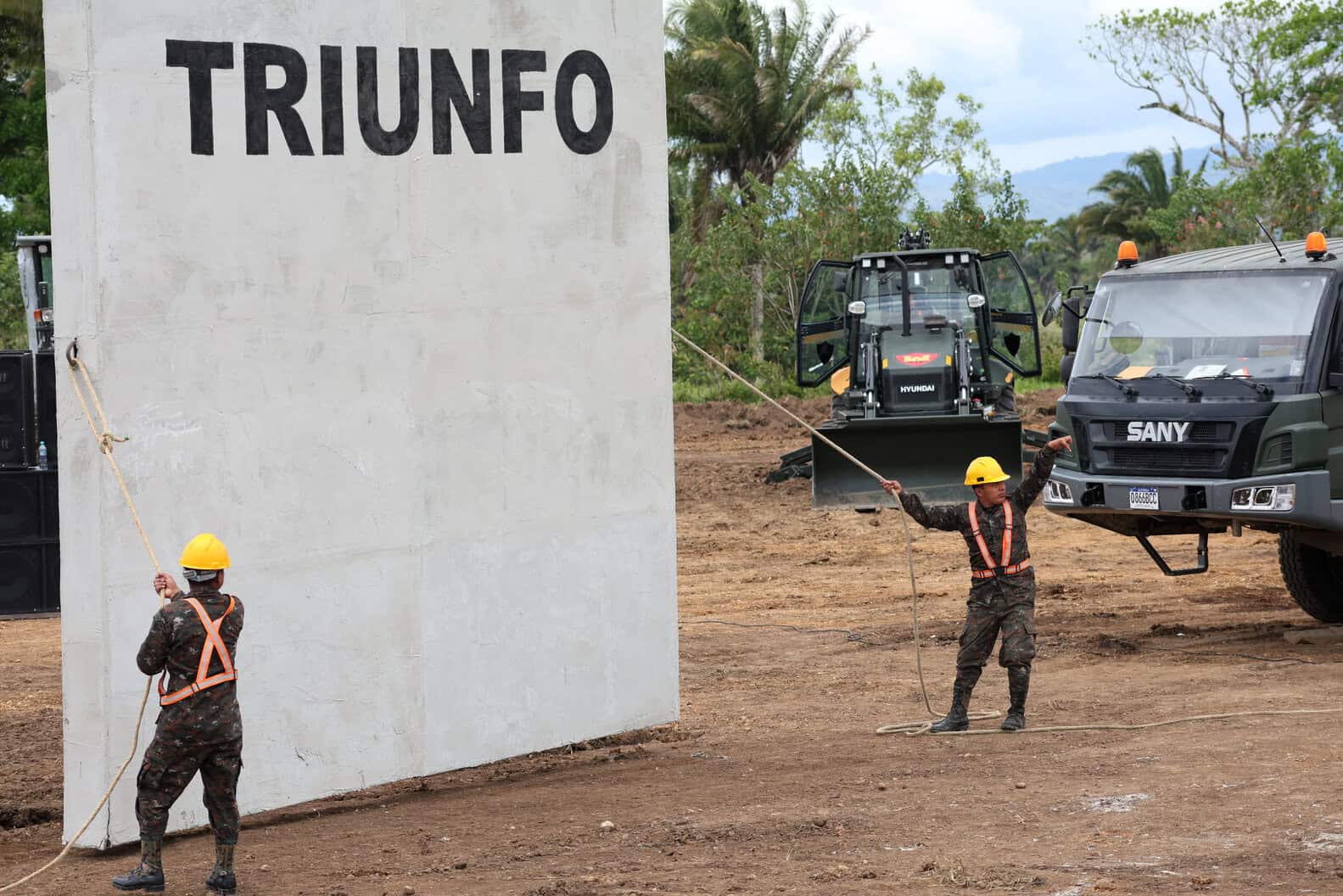
Guatemalan President Bernardo Arévalo placed the first stone Friday for a new maximum-security prison in the eastern department of Izabal that will hold more than 2,000 high-risk inmates, most of them gang members. The ceremony marked the official start of work on the Centro de Cumplimiento de Condena de Máxima Seguridad “El Triunfo” in Morales, about 290 kilometers northeast of Guatemala City. The facility will rise on a former farm seized from a drug trafficker who was extradited and convicted in the United States.
Authorities described the project as a key step to regain control of the prison system, where gangs have long directed street crime from behind bars. Interior Minister Marco Antonio Villeda and Defense Minister Henry Sáenz joined Arévalo at the site, where army engineers have already moved in heavy machinery.
The prison forms part of a broader government push against organized crime following coordinated attacks by the Barrio 18 gang in mid-January. Those assaults killed at least nine police officers and triggered riots in several facilities.
“This farm was used to steal resources from the Guatemalan people and rob us of our peace,” Arévalo said during the ceremony. “Today we are turning this same place into a resource to protect them.”
The land, known locally as Finca El Triunfo in the Quebrada Grande area near San José Bonanza, was taken through asset forfeiture years ago after being linked to drug trafficking, jade smuggling and illegal gold stockpiling. Officials said the site, located about 20 kilometers from Morales town center, now symbolizes the state reclaiming territory from criminals.
Construction will be handled by the Army Corps of Engineers under a one-year timeline. The project represents Guatemala’s largest investment in penitentiary infrastructure in more than four decades. Villeda told reporters the new center will operate under strict institutional standards. “The change does not happen by talking about it but by building it,” he said. “This process has no turning back.”
Sáenz added that the army’s role underscores a commitment to quality and legality. The facility will feature 12 modules and permanent surveillance systems designed to isolate violent offenders while respecting the legal framework.
Officials stressed that Guatemala is not copying models from elsewhere in the region. They said the prison will follow international human rights standards and due process rules rather than communal or mass-detention approaches used in other countries. Arévalo has described the penitentiary overhaul as essential after inheriting a prison system he called “in ruins” and often run for the benefit of inmates rather than the state. Gangs have used phones, bribes and weak oversight to order extortions and killings from inside.
The January violence began when Barrio 18 inmates took dozens of guards hostage in three prisons to protest the transfer of their leaders. Once authorities regained control, gang members outside struck back with ambushes that left police officers dead in and around the capital.
The new prison aims to prevent such coordination by housing only the highest-risk prisoners under tighter controls. It will not replace existing facilities but add dedicated space for those convicted of serious gang-related crimes.
Machinery is already on site, and work on the perimeter wall has formally begun. Full operations are expected by early 2027. Arévalo addressed local concerns in Morales, where some residents worried about the prison’s proximity. He promised increased state investment and security presence to benefit the area. “This is a triumph of the rule of law over organized crime,” he said. “Guatemala belongs to its people, not to the criminals.”





