Cattle ranching has been interwoven into the fabric of Guanacaste for centuries. Historically, enormous haciendas employed sabaneros, Tico cowboys, to raise cattle on the sparsely populated land. Recent history has seen a shift from agriculture and cattle to tourism and hospitality, but you still can’t drive very far down the road without having to maneuver around a herd of hulking cows that are completely indifferent to your driving needs.
Personally, I’m a cow fan. I like their huge ears and big, dark eyes. I love that they frequently belt out a deep, startling monster noise rather than the little moos cartoons have led us to expect. I even like when they’re blocking the road and you have to join the herd to get by, slowly driving with cows completely surrounding the car.
But my cow-love is conflicted because my favorite place in the whole world is the forest. Cattle ranching and forest conservation are mostly at odds. A huge amount of traditionally forested area in Guanacaste has been cleared to make pastures. Not only do these pastures lack the biodiversity of forested areas, but their presence can have a devastating negative effect on the remaining forests via fires. Sometimes fires are intentionally lit on pastureland as maintenance to remove brush and promote new growth in grasses. Even if the fires are accidentally started, the non-native grasses introduced to feed cattle can easily burn and spread to nearby forests.
I’ve heard of cattle being used as a management tool in wild areas. I believe some wetland areas use cattle grazing to keep the open wetland areas free of bushes and trees that would eventually close them in. A literature search gave me a mixed bag of results, saying that specialized techniques can have a positive impact, but studies have found issues with soil compaction and the destruction of understory plant biodiversity.
While most signs point to cattle having a negative effect on forests and the biodiversity of forest residents, I may have stumbled upon a little bright spot when it comes to cows using forested land. On a few of the properties where I have camera traps, which either currently have some cattle in the forest or did so historically and at some point, the farm owners modified a low-laying area so that it filled with water during rainy season. They did this to provide drinking water for their cows well into dry season when water begins to become scarce. What I’ve found is that the water is not only appreciated by cattle but by hungry and thirsty creatures of all sorts.
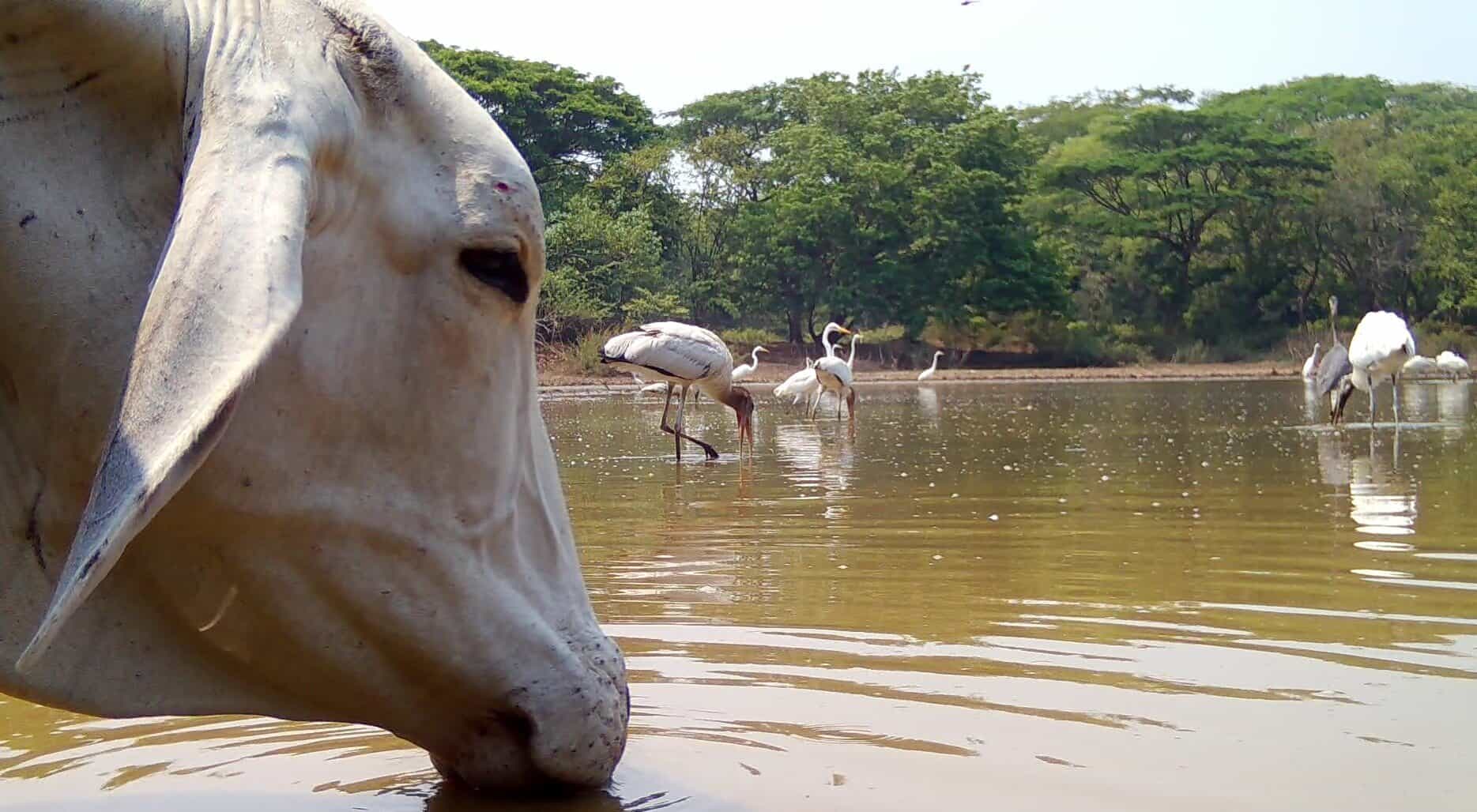
After the last of the potentially camera flooding rains have ceased, I slip on my rubber boots and squish into the mud of these forest-surrounded cattle ponds armed with a stick, a rock, and a camera trap. While keeping an eye out for hungry crocodiles, I pound the stick into the mud with the rock and attach the camera trap just above water level. Sure, cameras like these record thirsty cows that inevitably knock the camera over before my next visit, but the time between installation and cow-smashing reveals the huge biodiversity of species hunting in and drinking from the pond.
White-tailed deer come for a drink. Fishing bats scrape the water for surface-dwelling fish at night. Crocodiles and freshwater turtles call the water home. The whole area is buzzing with life. My favorite part of monitoring these cattle ponds is the water bird diversity. Since the area is open, the sun provides the perfect light for the cameras to record these long-legged, feathered creatures in all of their glory. Not only do I get a good view of the wide variety of birds taking advantage of this little piece of habitat, but I get to see the interaction of the different species as they drink and hunt all piled on top of each other.
In the end, it seems as though cattle ranching and the maintenance of biodiversity in forests are mostly at odds and farmers really need to work diligently so that their cattle aren’t having a decidedly negative impact. Each dry season proves to me that cattle ponds aren’t part of the problem and are instead, a biodiversity hotspot. Check out the video below and enjoy the species recorded by my camera trap (until it was knocked over and smashed into the mud by a cow).
About The Author
Vincent Losasso, founder of Guanacaste Wildlife Monitoring, is a biologist who works with camera traps throughout Costa Rica. Learn more about his projects at: Instagram and facebook or by email.