

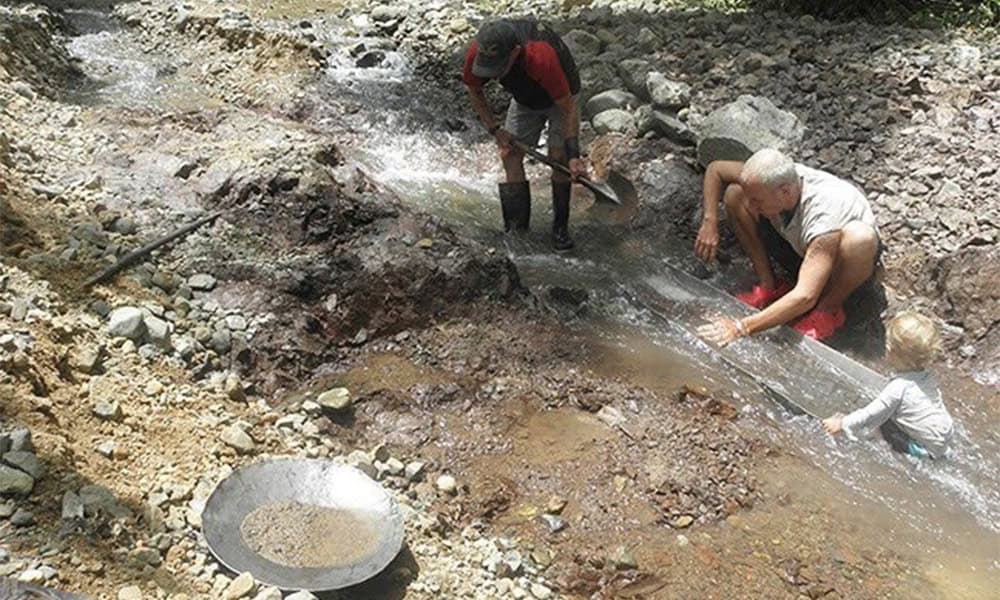
Costa Rica asked Nicaragua to increase police patrols along the San Juan River. The request targets the movement of gold-bearing sediments taken illegally from the Crucitas area in northern San Carlos. Public Security Minister Mario Zamora Cordero sent a formal letter to Foreign Minister Arnoldo André Tinoco on February 20. In it, Zamora called on the Foreign Ministry to ask Nicaragua for more frequent and visible security operations on the Nicaraguan side of the river.
Groups linked to organized crime extract the sediments on Costa Rican land then load them onto barges and boats. They cross the San Juan River, which sits under Nicaraguan sovereignty. Costa Rican officers work on their own territory but cannot operate on the waterway. The letter states the need to address this cross-border activity by groups tied to transnational organized crime. More Nicaraguan patrols would help stop the transport, officials said.
The issue centers on Crucitas in Cutris de San Carlos, near the border. A Canadian company once held rights for an open-pit gold mine there. President Óscar Arias signed a decree in 2008 that declared the project of national interest. Environmental groups opposed it over risks to groundwater, forests and wildlife. In 2010, an administrative court canceled the concession after it identified irregularities in the approval process. Lawmakers approved a nationwide ban on new open-pit metallic mining in 2011. The project ended.
Illegal miners moved into the abandoned site after the company withdrew. They use simple tools and methods. Police call them coligalleros. The affected land grew from about 900 hectares to more than 3,000 hectares. Operations now reach areas such as Conchuditas. Costa Rican forces run repeated actions in the zone. They deploy around 200 officers from the Public Force. They dismantled more than 114 tunnels and seized equipment. The effort costs about one million dollars per month. Many miners cross from Nicaragua.
Officials say much of the material leaves Costa Rica via the river for processing or sale on the other side. The geography and legal limits make full control difficult without help from Nicaragua. Zamora raised the expansion of illegal activity before lawmakers. He also backs a bill that would regulate mining in the district as one way to reduce the illegal operations.
Nicaragua has carried out its own actions against mining in the Río San Juan department. Those included arrests and seizures near the border. The San Juan River has long marked a sensitive point in relations between the two countries. Past talks covered territory and navigation rights.
This diplomatic request frames the Crucitas situation as a shared security concern that needs action from both sides. Costa Rican police continue land patrols and equipment seizures while the Foreign Ministry handles the outreach. The Crucitas case started as an environmental debate. It now involves border security and organized activity that crosses into Nicaragua.





