

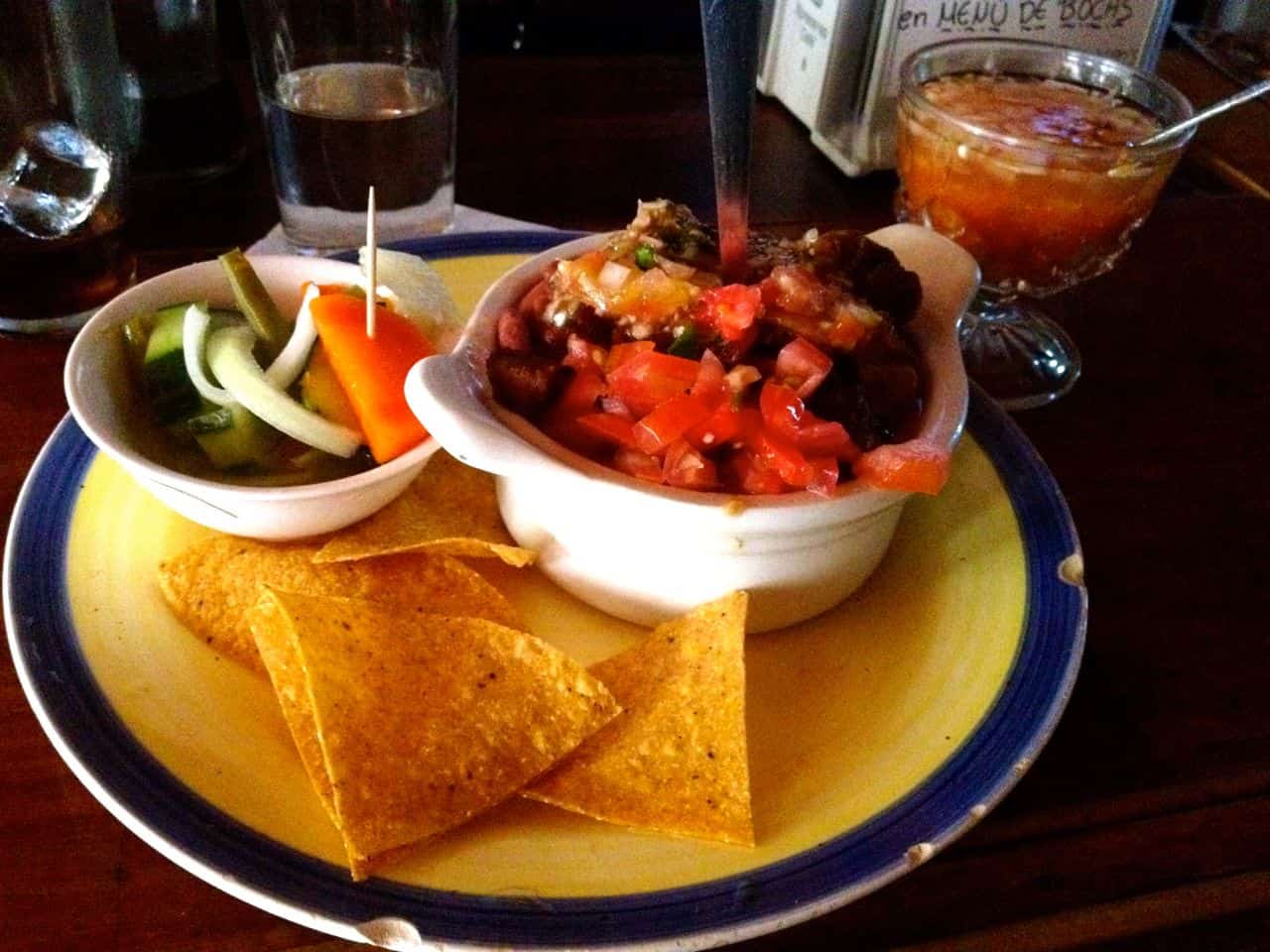
Costa Rican cuisine, also known as “comida típica,” is a melting pot of indigenous, Spanish, and African influences. The country’s diverse landscape and abundance of fresh ingredients have also played a significant role in shaping its culinary identity.
One of the staples of Costa Rican cuisine is rice and beans, known locally as “gallo pinto.” This dish is typically made with black beans and rice, and is often served for breakfast alongside eggs and natilla, a type of sour cream. Plantains, known as “plátanos,” are also a common ingredient in Costa Rican cooking and are often fried to make “tostones” or mashed to make “patacones.”
Meat, particularly beef, pork and chicken, is also a popular ingredient in Costa Rican cuisine. “Chifrijo” a dish made with rice, beans, and chicharrones (deep-fried pork) is a popular appetizer. “Olla de carne,” a hearty stew made with beef, potatoes, and vegetables, is a traditional Costa Rican dish that is often served with rice and avocado.
Seafood is also a major part of Costa Rican cuisine, thanks to the country’s long coastline. “Ceviche” is a popular dish made with raw fish marinated in lime juice, cilantro, and spices. “Arroz con mariscos,” a dish of rice cooked with seafood, is also a popular dish.
Fruits and vegetables are an important part of Costa Rican cuisine. “Cas” a type of sweet, small and round fruit, is often used to make jams and jellies, and is also a popular ingredient in “casado,” a traditional dish that typically includes rice and beans. “Chayote” is a type of squash that is often used in stews and soups.
The indigenous people of Costa Rica have also influenced the country’s cuisine, particularly with the use of “chilies” and “corn.” “Chilies” are used in many traditional Costa Rican dishes and are often used to make “salsa,” a type of spicy sauce. “Corn” is also a staple ingredient in Costa Rican cuisine and is used to make “tortillas,” which are often served with meals.
In addition to traditional Costa Rican dishes, the country’s cuisine has been influenced by its Spanish and African heritage. “Tamales,” a dish made with corn dough and filled with meat or vegetables, are a popular dish that originated in Mexico and were brought to Costa Rica by the Spanish. “Pollo al coco,” a stew made with coconut milk, is a dish that originated in Africa and was brought to Costa Rica by the Afro-Caribbean community.
Costa Rican cuisine is also known for its use of herbs and spices. “Coriander,” “cilantro,” and “parsley” are commonly used in Costa Rican dishes. “Sazon,” a spice blend that typically includes cumin, garlic, and annatto, is also a popular ingredient in Costa Rican cooking.
In summary, Costa Rican cuisine is a melting pot of indigenous, Spanish, and African influences, with an emphasis on fresh ingredients and local flavors. Rice and beans, plantains, meat, seafood, fruits, and vegetables are all important parts of Costa Rican cuisine, and herbs and spices play a significant role in adding flavor to traditional dishes. Costa Rican cuisine is a reflection of the country’s diverse history and culture, and is a delicious way to experience the local flavors of Costa Rica.





