

In a letter published as a full-page ad in Spanish-language daily La Nación on Monday, conservation group Sharkproject International announced the nomination of President Luis Guillermo Solís for the 2016 Shark Enemy of the Year award.
The annual “award” recognizes a person or entity that had the most negative effect on shark conservation for that year. Thirty different marine conservation organizations nominated Solís as Shark Enemy of the Year for 2016, based on recent decisions to roll back shark protections in Costa Rica.
An international jury will determine the award’s final recipient in coming months. The “winner” will be mailed a rusted shark fin trophy in January coinciding with the presentation of Sharkproject International’s prestigious Shark Guardian Award.
“During your presidency, shark conservation efforts have suffered greatly,” the group’s letter stated. “We have noted a persistent and perverse urgency to undo shark conservation efforts, which is resulting in the perpetuation of overfishing.”
According to marine conservation groups, the Solís administration’s anti-shark policies began with foot-dragging on the implementation of minimum catch sizes for sharks at the beginning of this government’s term in 2014.
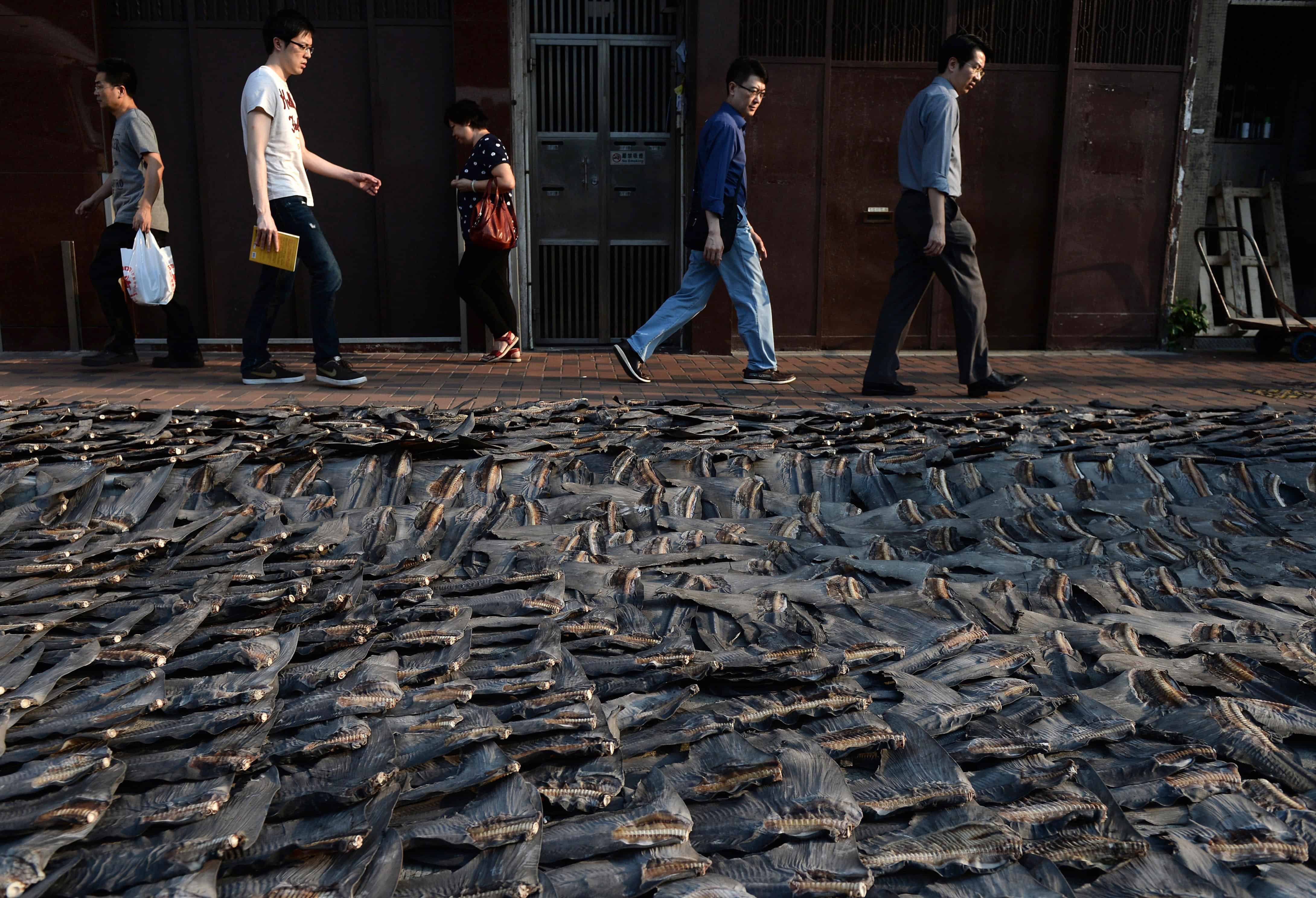
The Solís administration then authorized the export of two shipments of hammerhead shark fins in November 2014 and February 2015. Those exports were authorized months after new regulations regarding hammerhead sharks in the Convention on International Trade in Endangered Species of Wild Fauna and Flora (CITES) were set to take effect. According to CITES, those fins could only have been exported if Costa Rica had conducted studies to determine the commercialization of hammerhead products was not detrimental to the species’ populations. At the time no such studies had been conducted.
The shark fin shipments prompted an international scandal and local protests. American Airlines, which transported the shark fins to Hong Kong, then banned future shipments of shark fins. Costa Rica has since conducted the required CITES studies and placed a year-long moratorium on the export of hammerhead shark fins.
This alone placed Solís’ name up for consideration for Shark Enemy of the Year, but the results of closed-door negotiations between the government and fishing-sector representatives in September was the nail in the coffin. In a list of agreements given to NGOs by the presidency minister, the government vowed it would no longer propose or support the inclusion of shark species into international conventions like CITES, and it would negotiate with carriers like American Airlines and UPS to convince them to resume the shipping of shark fins.
The government also agreed to review the composition of the CITES scientific council to propose adding a member of the fishing industry on the board.
“That was the last straw,” said Randall Arauz, president of the Costa Rican marine conservation group Pretoma. “The Solís administration is undoing the progress that has been made in the last several years.”
According to Arauz, much of that progress was made by Solís’ predecessor, President Laura Chinchilla (2010-2014). In 2010, her first year as president, Chinchilla ordered all boats to unload their cargo at public docks under the supervision of authorities. Prior to that, private docks in the Pacific port city of Puntarenas served as a hub of illegal Taiwanese shark finning operations. For years, a lack of regulations at these private docks made Costa Rica the center of shark finning – an unsustainable practice in which fishermen cut off sharks’ valuable fins and throw the carcasses overboard – in the Eastern Tropical Pacific. Chinchilla’s efforts led Sharkproject International to award her the Shark Guardian award in 2013.
If selected, Solís would be the second Costa Rican president to receive the Shark Enemy Award. In 2006, then-president Abel Pacheco was given the award for failure to act against the shark-finning industry.
“The only thing that could make this worse for the Solís administration would be for them to open the private docks back up to the Taiwanese shark-finning fleets,” Arauz said. “That is the only way they could do any more damage than they have already done.”





