

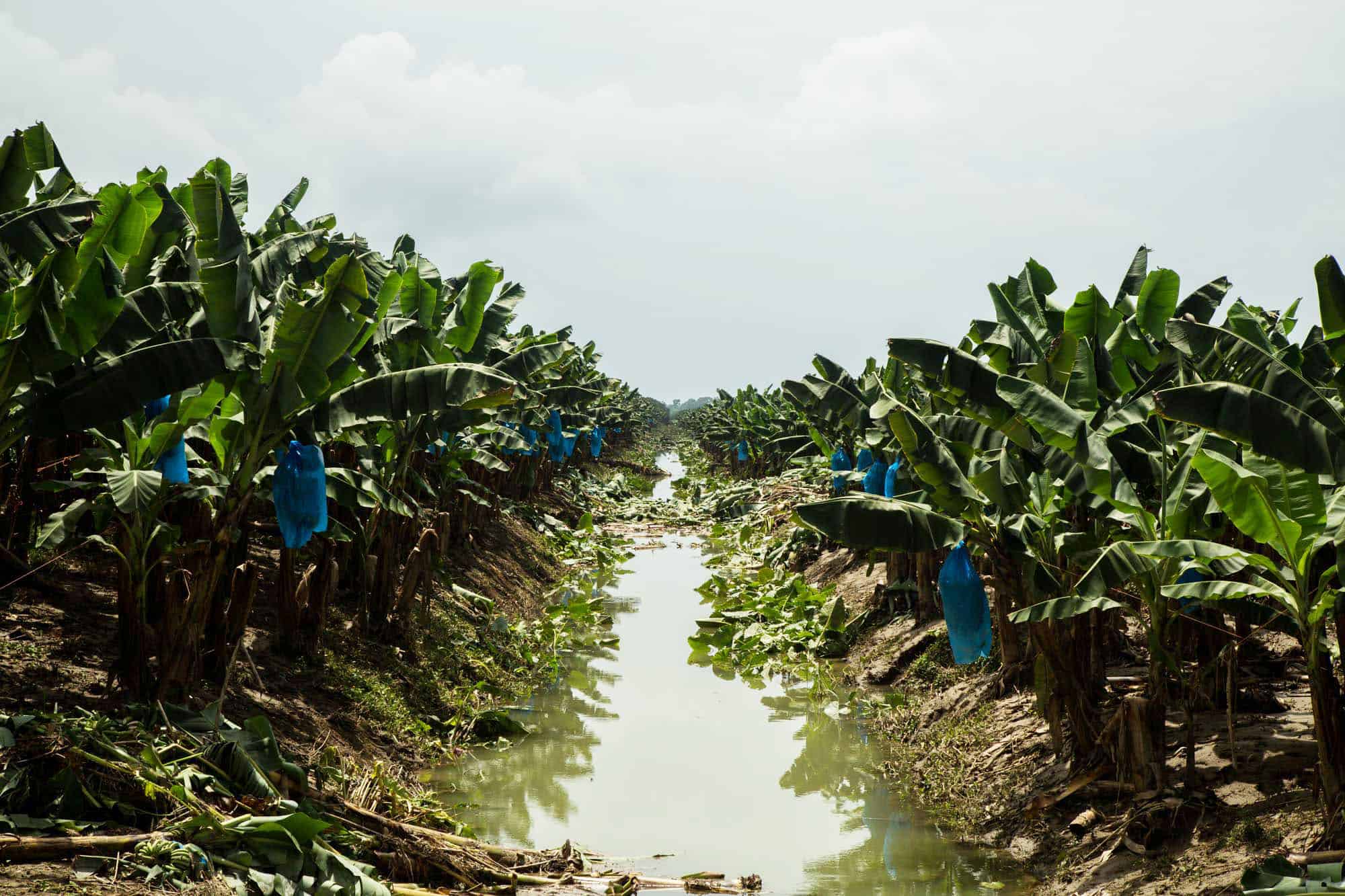
Flooding in the Caribbean has washed out fields of two of Costa Rica’s most important agricultural exports. Banana and pineapple producers are still trying to get a handle on the damage caused by heavy rains and flooding last week that cut off exporters from ports and damaged fields, business leaders told The Tico Times on Wednesday.
The flooding over the weekend is the latest setback for fruit producers who already have seen double-digit drops in exports during the last year because of inclement weather. Costa Rica is the world’s single largest producer of pineapples and the second largest banana producer behind Ecuador. Both fruits garnered more than $1.76 billion in exports during 2014, according to figures from the Foreign Trade Promotion Office, or PROCOMER.
Bananas are Costa Rica’s single most important agricultural export worth over $900 million in exports annually, according to PROCOMER. Jorge Sauma, general manager of the National Banana Corporation, CORBANA, said that banana production has already seen a 10 percent drop in production since this time last year because of higher than normal rainfall. The CORBANA manager said he did not have an estimate on the number of hectares affected. Setbacks in production from flooding in June could push exports down 15 or 20 percent, he said.
“It’s the worst event we’ve seen in 45 years,” Sauma said.
Besides the volume of bananas exported, the yellow fruit is an important employer in rural areas. Sauma said that the banana industry directly employs more than 40,000 workers and another 100,000 indirectly. Pineapple directly employs 26,000 people, according to National Chamber of Pineapple Producers (CANAPEP) President Abel Chávez.
Chávez said that roughly 28,000 hectares of pineapples fields have been damaged as a result of flooding across the Caribbean area. The CANAPEP president said pineapples in the fields might not be eligible for export because of water damage that discolors the fruit’s interior.
Before last month’s flooding, both fruits were already seeing lower than normal exports. Chávez said that pineapple exports were down 14 percent from last year as of April. Bananas were down 23 percent, according to a report from the Foreign Trade Ministry.
Sauma and Chávez said that repairing damaged dykes, assessing crop damage, and repairing internal infrastructure are the immediate next steps now that the rains have pulled back. Both business leaders said that government assistance to get roads and bridges repaired would be key to getting their export operations back to normal.
President Luis Guillermo Solís and leaders from the export sector met at Casa Presidencial in San José on Tuesday to discuss government support for flood-affected businesses. Casa Presidencial confirmed that exporters would be allowed access to credit from the public Development Bank founded to support small and medium-sized businesses.
Bananas and pineapples grow year-round in Costa Rica. Flooding exacerbated dropping export figures, but both business leaders said if the weather improves they could makes strides to recover lost production.
L. Arias contributed reporting to this article.





