

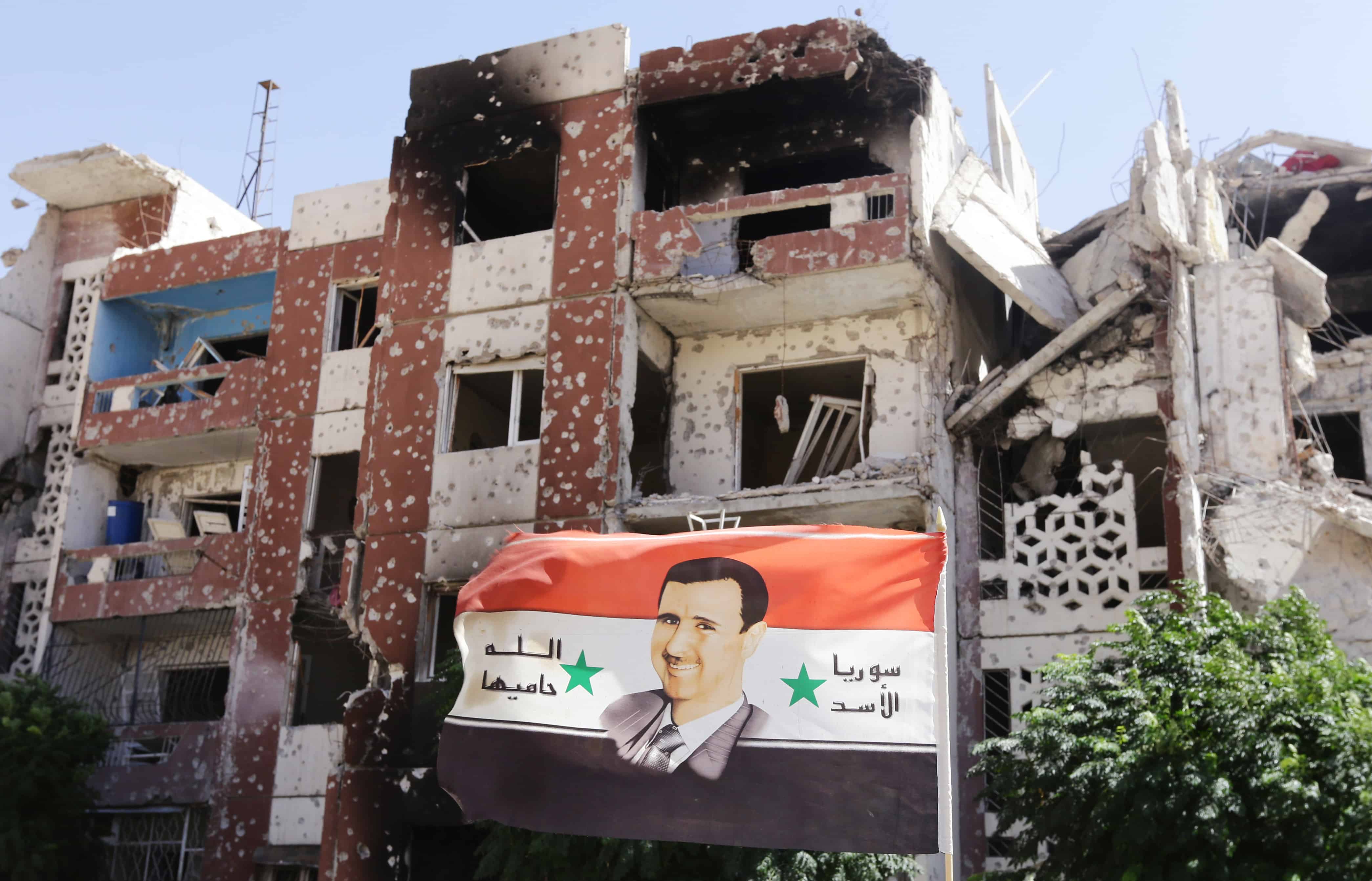
In the past month, U.S. President Barack Obama has launched an open-ended Middle East war, built an impressive coalition of allies and entirely reversed his previous strategy of standing back from the region. Curiously, however, Obama has so far refused to reckon with the actor that more than any other is responsible for ruining his foreign policy doctrine, creating the security crisis and dragging U.S. military forces back to Iraq and Syria.
That is not al-Qaida, the Islamic State, Khorasan or any of Iraq’s sectarian factions. It is the Syrian regime of Bashar Assad.
The Islamic State’s recent military gains in Iraq and origins in al-Qaida have tended to obscure the reality that its surge is first and foremost the result of Assad’s brutal war against the Syrian opposition. As Obama’s own envoys to Syria have said repeatedly, the collapse of government control over the north and east of the country, combined with Obama’s refusal to provide weapons to moderate rebel forces, created an opening for the al-Qaida remnants that eventually launched the Islamic State. They were directly abetted by the Assad regime, which observed an unspoken truce with the extremists while dropping barrel bombs and chemical weapons on civilians in Aleppo and greater Damascus.
Having backed away from carrying out airstrikes against Assad’s assets a year ago, Obama essentially abandoned any effort to enforce his August 2011 declaration that the dictator must give up power. Secretary of State John Kerry, who took office in 2013 promising to “change Assad’s calculations,” dropped a quixotic initiative to broker a post-Assad regime after a Geneva peace conference imploded last winter.
Now, Obama acknowledges, vaguely, that an end to the “cancer” of the Islamic State depends on “an inclusive political transition” in Syria. But he has not so much as hinted at a strategy for bringing that about, and his war planners told Congress they have no plans to extend strikes to Assad’s forces — even when they attack the rebel units Obama is depending on to fight the Islamic State.
The president has some understandable reasons for this reticence. Taking on Assad is hard: He’s proven he’s immune to diplomatic pressure, and military attacks would require a major escalation of the air campaign. Action against Assad would place the United States at odds not only with Iran and Russia, which so far are not obstructing the war against the Islamic State, but also with the Iraqi government, which continues to support the Damascus regime.
The problem is that ignoring Assad is likely to lead to even worse consequences. Already, the regime and its spokesmen are exulting in the U.S. bombing raids and doing their best to portray the United States as a de facto ally, while Syrians in rebel-held areas are demonstrating against the U.S. strikes because they are seen to be weakening the resistance to Assad. Meanwhile, the regime appears to be stepping up its own bombing raids against the non-extremist opposition. A failure of the United States to respond could destroy U.S. relations not only with its only on-the-ground allies in Syria but also with the Sunni nations that have joined the campaign against the Islamic State.
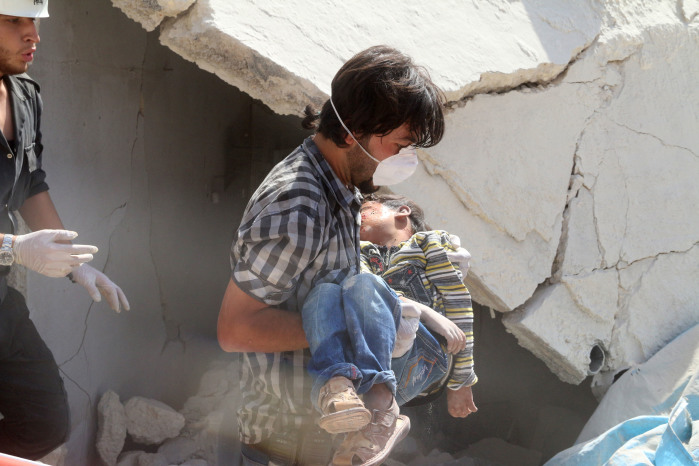
Obama is not without options. As the State Department’s former Syria adviser Frederic Hof has suggested, one is simple: The Pentagon should publicly inform the Syrian government that any antiaircraft systems tracking U.S. planes will be destroyed, as will any of the regime’s military planes that take to the air.
The next step has long been sought by the Turkish government, which so far has been a reluctant ally in the anti-Islamic State campaign: Create a no-fly zone for Syrian aircraft over areas held by the rebels. With U.S. planes already operating in the area, this would be far simpler than it would have been before. It would, as Hof points out, finally allow the opposition Syrian National Coalition and its interim government to establish itself in the country and create a secure enclave.
In the end, the Syrian political settlement Obama says he seeks will require pursuing Kerry’s original idea of tipping the military balance so that Assad’s generals and his Alawite community face a choice between compromise and destruction. Henri Barkey of Lehigh University suggests that Obama offer a deal: If Assad is removed and the regime reaches a truce with the moderate opposition, Syria can join the anti-Islamic State coalition.
Rather than take the risks involved in such gambits, Obama’s inclination seems to be to postpone the Assad problem indefinitely. If so, he’s making the same mistake he did when he deferred confronting the dictator in previous years. If the Islamic State is a cancer, Assad is the source tumor. If he is not treated, he will poison Obama’s cure.
© 2014, The Washington Post





