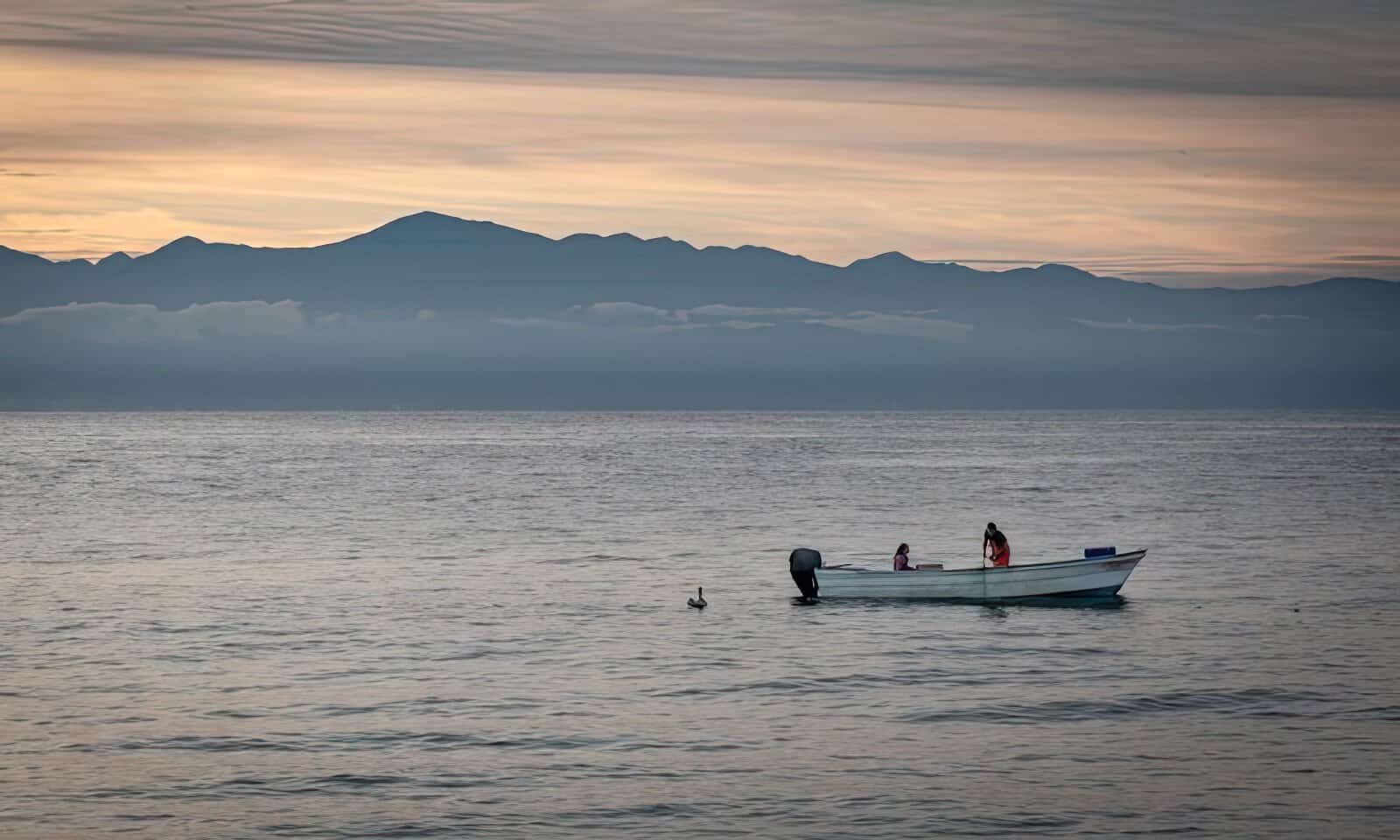
Although its name sometimes applies to the whole eastern seaboard of Nicaragua, and even to the “La Mosquitia” region of Honduras, the so-called “Mosquito Coast” more accurately consists of a strip of territory stretching from Nicaragua’s southern Caribbean coast near San Juan del Norte (Greytown) to Puerto Cabezas.
The Mosquito Coast has gotten its name from its principal inhabitants, the Miskito Indians, whose name was corrupted into “Mosquito” by European settlers. The other main ethnic groups on the coast are the Mestizo, Mayanga, Creole, Garifuna and Rama.
The Miskito Indians first came into contact with the English when the Earl of Warwick established a colony on a small cay off the coast. The Miskito royal dynasty was established when a Miskito leader sent his son, known to his descendants as Oldman, to England where he was received in audience by King Charles I.
He then returned to the coast to find that his father had died during his absence, and that he had become King. His son and successor, Jeremy I, visited Jamaica in February 1688 and placed himself and his people under English protection. From then on all of his successors were confirmed in their successions by virtue of a certificate from the Governor of Jamaica.
From 1655 to 1850, Great Britain claimed a protectorate over the Miskito Indians but had limited success in its endeavors to establish colonies. The protectorate was disputed by Spain, the Central American republics and the United States.
The opposition by the United States was due to the fear that Britain would acquire a privileged position regarding the proposed inter-oceanic canal. Greytown, now known as San Juan del Norte, was a settlement at the eastern terminus of one of the proposed canal routes across the Central American isthmus during the 19th Century.
During the California Gold Rush, thousands of travelers crossed the isthmus through this town on their way to or from San Francisco, in the United States. Sail and steamships traveled between Greytown and New York and New Orleans. Small boats transported passengers along the San Juan River up to Lake Nicaragua and Granada.
In 1854, a U.S. naval ship bombarded Greytown after failing to receive compensation for violence that had been allegedly directed against Solon Borland, a U.S. diplomat, and other U.S. citizens. But in the Clayton-Bulwer Treaty of 1850, both powers pledged themselves not to fortify, colonize or exercise dominion over any part of Central America.
The Miskitos were especially useful to the British during the American Revolutionary Wars, attacking and harassing the Spanish colonies and gaining several significant victories alongside the regular British Forces. Britain and Nicaragua signed the Treaty of Managua in 1860 which transferred to the Managua government sovereignty over the Caribbean coast. Despite this withdrawal, Britain maintained an unofficial protectorate over the region, often intervening to protect Miskito interests against Spanish encroachments.
Relations between the British and the Miskitos remained close, with a number of British advisers, teachers and missionaries continuing to serve in the region. Several members of the Miskito royal family received their education either in Jamaica, British Honduras, or England, and several Kings were crowned according to Anglican rites.
After the Treaty of Managua, King George Augustus Frederic II ceased to be recognized as a Sovereign King and was referred to merely as Chief. His kingdom was subsequently downgraded to “Reservation” status. The Reserve continued to be governed by the elected Chief, aided by an administrative council, which met in Bluefields. The Miskito Indians denied that the sovereignty of Nicaragua implied any right of interference with their internal affairs.
The question was referred for arbitration to the Habsburg emperor of Austria, whose decision, published in 1880, upheld the contention of the Indians and affirmed that the sovereignty of Nicaragua was limited by their right of self-government. After enjoying almost complete autonomy for 14 years, the Miskito Indians voluntarily surrendered their position, and on 20 November 1894, their territory formally became incorporated into the Republic of Nicaragua by Nicaraguan President José Santos Zelaya.
The rest of the 19th century saw the Miskito Nation quietly strangled out of existence. Finally, in 1894 the Nicaraguan Army intervened with a large military force in Bluefields and drove the last Miskito Chief out of his domain and formally abolished the reserve. The Chief escaped aboard a British warship to Jamaica, where, in consideration of the old alliance, he received a government pension for the rest of his life.
The Harrison-Altimarino Treaty, signed between Great Britain and Nicaragua in 1905, signified the end of British claims to the territory and though it abrogated the earlier recognition of the Miskito Monarchy, it included certain concessions for a 50-year period, such as exemption from military service, tax exemptions, grazing rights and respect for Miskito Indian and Creole land titles.
The former Miskito Coast was then established as the Nicaraguan department of Zelaya. In 1987, under the Law of Autonomy, the region was re-drawn as the North and South Atlantic Autonomous Regions (RAAN and RAAS). This last change allowed the regions a certain degree of self-government, but making their “autonomy” have meaning and function effectively remains one of the biggest challenges the region faces.
Today, the British Embassy in San José, Costa Rica, which has had coverage for Nicaragua since our Managua Embassy closed in 2004, takes a keen interest in Nicaragua’s Caribbean coast. Our embassy staff make regular visits there to monitor current events and administer low-cost, high-impact community projects with the support of local partners.
Written by Bruce Callow