

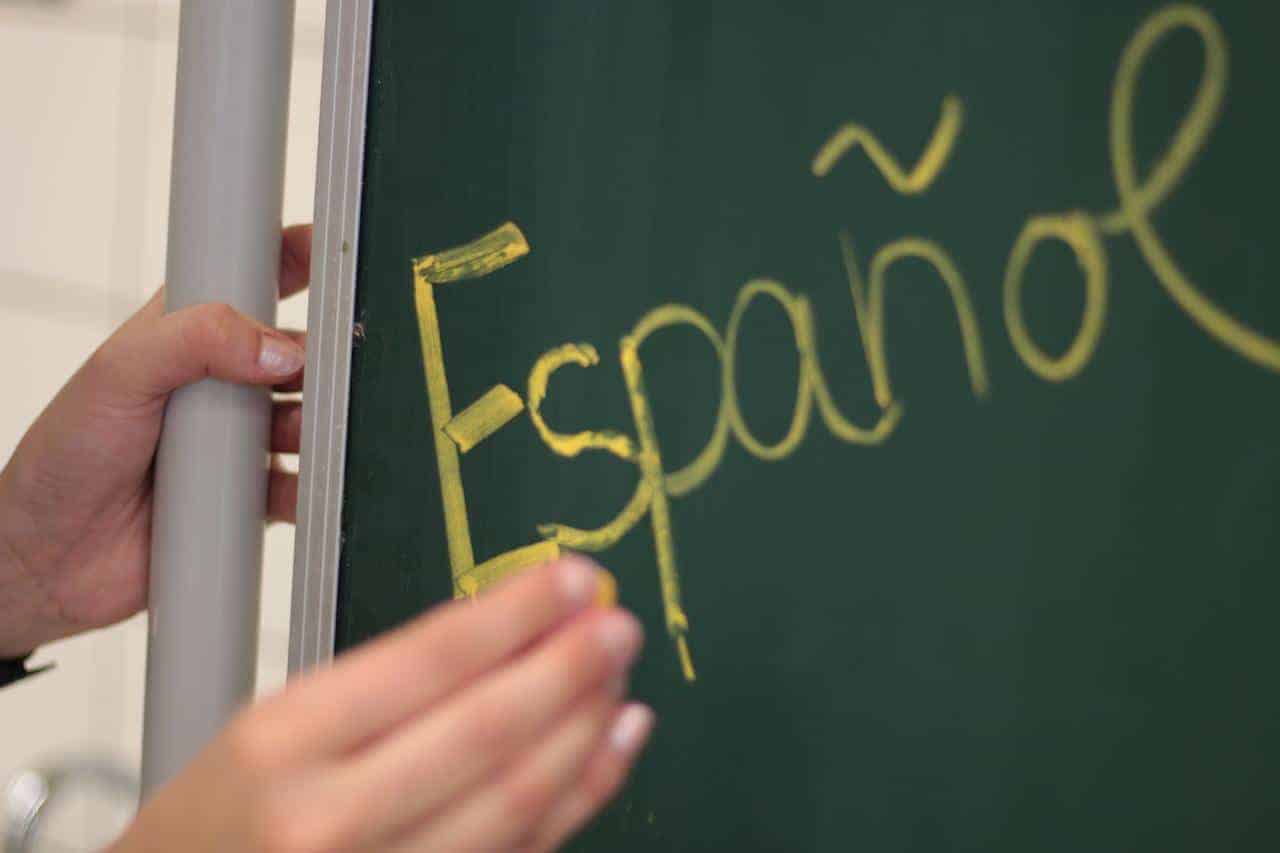
Given the history of the American continent, it is not surprising that Spanish and English have so affected each other. Certainly, English has contributed a lot to Spanish, but some scholars claim that Spanish has contributed about 10,000 words to English.
Many of these are food terms used in their original Spanish forms, such as “tamales,” “taco,” “salsa,” “guacamole,” “enchilada,” “burrito,” “tortilla,” “nachos,” etc. Others are variations or even misunderstandings of the original. Some food words are of indigenous origin, but came into English via Spanish.
The Náhuatl (Aztec) word “tomatl” became “tomate” in Spanish and “tomato” in English. The Náhuatl word “xocolatl” became “chocolate” in both languages. “Papaya” came from the West Indies Arawak word “papaya.” “Banana,” on the other hand, entered Spanish from the West African languages of Wolof, Mandingo and Fulani.
A number of animal words also went directly from indigenous languages into Spanish and then English. “Puma” originated in Quechua (Inca), while “jaguar” comes from “yaguar,” a word of the Guaraní who live in what is now Paraguay. “Iguana” is a modification of “iwana,” used by the Arawak and Carib of the West Indies. “Coyote” is the same in Spanish and comes from the Náhuatl “coyotl.” Others come directly from Spanish: an “armadillo” is the same in Spanish and means “little armed one.”
“Cockroach” comes from “cucaracha,” and “condor” is the same in both languages. “Mosquito” is a diminutive of “mosca,” meaning “fly”; thus a mosquito is a “little fly.” It is used the same way we use it in much of Latin America, but in Costa Rica a “mosquito” really is a little fly, while what we call “mosquito” is a “zancudo,” or “long-legged one” (the word for “stilt” is “zanco”).
When English-speaking explorers reached what is now the U.S. Southwest in the early 19th century, they encountered an established Mexican culture. This provided English with many everyday words. Since the horse was an essential part of frontier life for both Mexicans and English speakers, some of these words involve horseback riding.
“Rodear,” means “to go around,” and “rodeo” variously means “detour,” “evasion” or “roundup.” “Lasso” comes from “lazo,” meaning “bow” or “knot.” “Lariat” comes from “la riata,” meaning “the rope.” A “pinto,” meaning “painted” in Spanish, is a horse with two colors splashed on its body, while a “paint” has three. “Mustang” comes from “mestengo” or “mesteño,” a stray or ownerless animal. The word “hackamore” is a distortion of “jáquima,” which means “restraint” or “bit,” and comes from the Arabic “shaqïmah.”
“Ranch,” a common English word today, hails from the Mexican Spanish “rancho,” meaning “ranch,” “settlement” or “meat ration,” but which here in Costa Rica refers to a small, round, open structure with a thatch roof. “Arroyo” comes from “arroyo,” but in Spanish means “stream,” rather than a gulch. “Corral,” on the other hand, means the same in both languages.
Even a few cowboy slang words come from Spanish. “Buckaroo” comes from “vaquero,” meaning “cowboy.” “Juzgado,” meaning “tribunal” or “courtroom,” gave us “hoosegow,” while “vamoose” comes from “vamos” or “vámonos,” “let’s go.” “Bronco” is the same word in both languages, but simply means “wild” or “rough” in Spanish. Finally, the Spanish word for “horse,” “caballo,” became “cabayo” in cowboy lingo, and refers to a nag. You may even remember the lyrics to the song “Strawberry Roan”: “Down in the corral standing alone was an old cabayo, a strawberry roan.”
The word “savvy” comes from “saber,” “to know”; “sabe,” then, means “he/she knows.” Some of you may remember the Lone Ranger, who called his faithful Indian guide “Tonto,” or “stupid,” and was called by the same “Kemo Sabe,” that is “Quien Sabe,” “Who Knows,” or, perhaps mistakenly, “He Who Knows,” “El Que Sabe.” Does anybody know whether that was a joke or true prejudice?
Just for the record, here is a partial list of other words that passed to English from Spanish:
- algebra: algebra, from the Arabic aljabr, the reunion of broken parts, or bone setting
- cafeteria: cafetería, “coffee store”
- canyon: cañón
- comrade: camarada, old Spanish for “barracks company” or “roommate”
- crimson: from old Spanish “cremesín”
- filibuster: filibustero, “pirate”
- flotilla: flota, “fleet”; flotilla, “little fleet”
- guerrilla: guerra, “war”; guerrilla, “small war,” referring to a small raiding party or fighting force
- hammock: hamaca
- macho: macho, “male” (for some reason, it also means “blonde” in Costa Rica)
- maroon: cimarrón, “wild”
- peccadillo: pecado, “sin”; pecadillo, “little sin”
- renegade: renegado, “one who has abandoned his religion or his principles” (“negar” means “to deny”)
- tobacco: tabaco
- tornado: tornado, the past participle of tornar, “to turn”
- vanilla: vainilla
- yam: ñame
All of these cases make some kind of sense. Next time, we’ll take a look at some examples of Spanish words that have stumbled and bumbled their way into English.





