

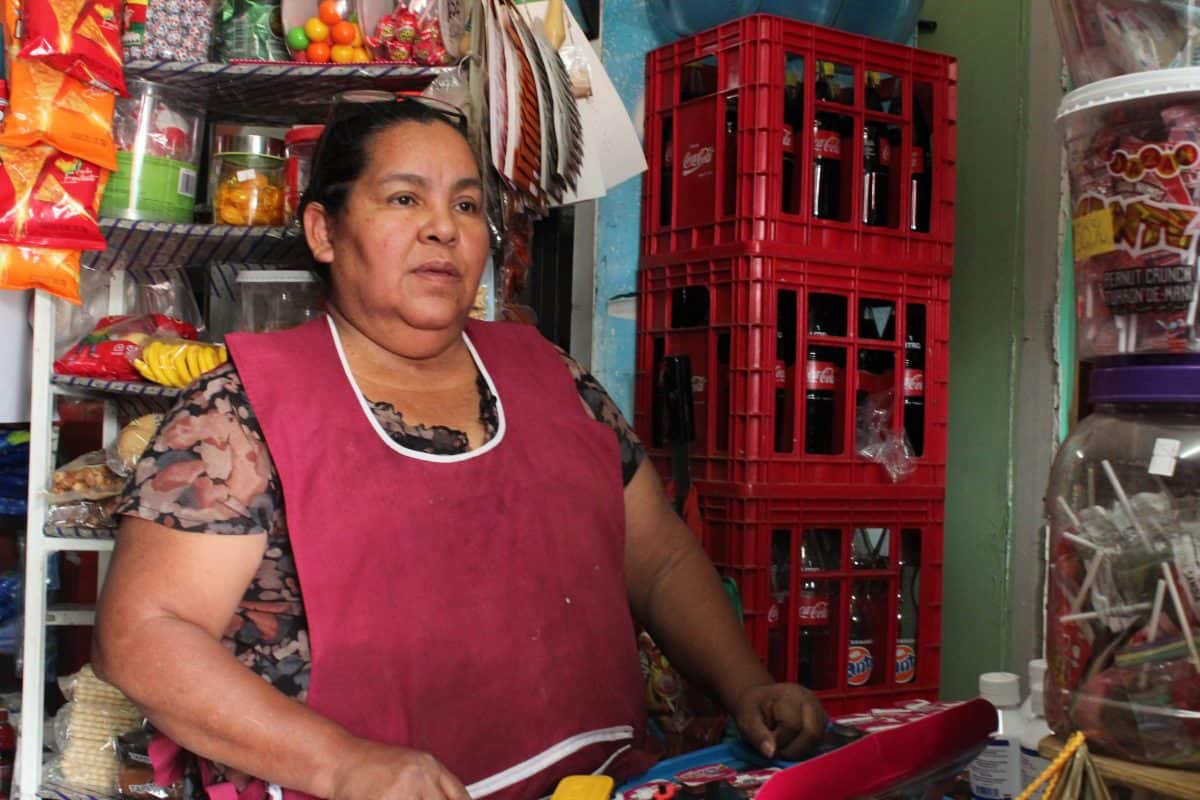
When I first came to live in Costa Rica, I could only do my shopping in a pulpería, a small grocery store in which everything is behind a counter and the customer must request his purchases. This was scary, given that, for one thing, I was not familiar with the products and, for another, I still sounded like a 2-year-old in Spanish.
Buying something meant a lot of pointing and mumbling of brainless phrases such as “Um, frijoles, um, queso, um, bananos,” and mostly answering questions regarding quantity and type with “No entiendo.”
Actually, I’m not at all sure that “small grocery store” is the right way to describe what a pulpería is, or at least what it used to be. The pulpería in Costa Rica, at one time, was the place where everything was sold and where everyone congregated. To understand this better, it’s necessary to take a look at history.
Because of a lack of mines and the scarcity of indigenous survivors, Spaniards who settled in Costa Rica had failed by the 17th century to construct a society similar to that of their neighbors, that is, one based on the exploitation of indigenous and slave labor. Thus, Costa Rica was principally settled by the white man through individual agricultural colonization.
Pioneers simply penetrated the jungle, built a shack, burned a piece of the forest and planted it. Often such people remained a two- or three-day trek from provisions.
Over time, others arrived, burned forest and also established their homesteads. They remained far from each other and even farther from provisions. Finally, enterprising folks established centers for provisions for families in the area, what was called a “general store” on the American frontier. It was “general” because it was the one and only in the area and needed to offer for sale everything the frontier dwellers needed, from salt to clothing to machetes.
About once a week, people came down from their settlements to buy a wide variety of things, including guaro (in this case, “moonshine”) and to bump into other folks. Some of these places even established dance areas, bars and food counters for the weekly gatherings.
In time, these stores became the nerve centers of groups of houses and marked the foundations of towns.
These are the origins of the pulpería, but what about today? Nowadays, the pulpería is not so much a general store, but what we might call “the corner grocery store,” with the important difference that it retains the merchandise behind a counter. If it is a small store with the merchandise out in aisles, it is called a minisúper.
This incongruous name came about from the fact that a supermercado, with all its merchandise out in the aisles, came with time to be called simply a súper, and, therefore, a small store of this type became a minisúper.
Though the corner grocery store is fast disappearing in the United States, the pulpería is still going strong in Costa Rica. In fact, you will easily find one or more in every small neighborhood. The reason for this illustrates some basic differences between the two cultures.
For one thing, the pulpería tends to be attended by its owners day and night, and often their home is in the same building. This makes for lower overhead, and thus pulpería prices tend to be quite competitive with those of supermarkets.
For another, many Costa Ricans do not have cars, and a good number of women still don’t have driver’s licenses, so people simply prefer to walk a short distance to pick up their daily needs.
Moreover, some people still live literally from day to day. That is, they have to scrape together enough money to buy their food for the day, and in the days before people had refrigerators – not so long ago in Costa Rica – people had to get their supplies daily so their food wouldn’t spoil.
All of this accounts for the small packaging we find so maddening and wasteful. If you can buy only for each day, then you buy a little bit at a time, and if you must carry your package home, it cannot weigh too much.
Remember, also, how tied to tradition Latin Americans tend to be. As the pulpería was the social gathering spot on the frontier, people still tend to congregate there, especially in small villages where often there is no other option.
Finally, we come to the point that causes so much curiosity: the word “pulpería.”
Some suggest it comes from pulpo, or octopus. Thus, pulpería would mean “the place where octopus is sold” or “octopus store.” Anything, of course, is possible, but it is a bit absurd to imagine a frontier store selling octopus in the middle of the bush.
A better possibility is that the word comes from the word pulpa, which can mean either “boneless meat” or “fruit pulp.” Thus, it could mean “place where meat is sold.”
My intuition tells me otherwise. I think it comes from the long-standing Central American tradition of drinking fruit juices and batidos, or smoothies. Before people had electricity and blenders – also not that long ago here – they may have had to go to the pulpería to get their pulpa de fruta (unless they wanted to do a huge amount of handwork) so they could make their all important batidos.
It may even be that they took their own fruit to the pulpería to have it made into pulp. Thus, perhaps it was not only “the place where fruit pulp is sold,” but also “the place where fruit pulp is made.”
Some historian or linguist out there may know the truth.
Author Kate Galante in 06





