
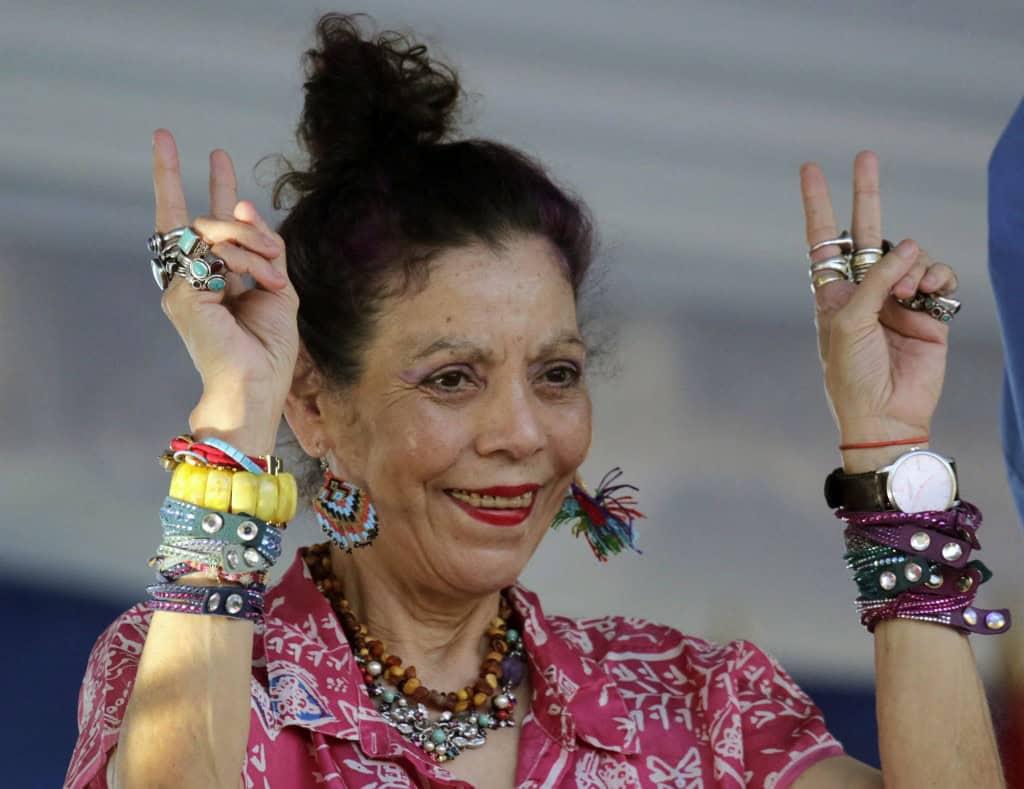
Nicaragua’s government will brief foreign diplomats on a proposed reform aimed at excluding opposition parties from elections, co-president Rosario Murillo said Friday, following criticism from several countries and international organizations.
The National Assembly and electoral authorities, both controlled by the government, are preparing legislation requested by President Daniel Ortega to prevent “traitors” and “coup plotters” serving the interests of the United States from taking part in elections, terms he commonly uses to describe his opponents.
Congress announced Friday that the proposed constitutional reforms will be submitted to the presidential couple “for review and authorization,” with a “broad consultation process” set to begin next week. A vote on the proposal is expected in early August.
“Consultations will be held with business leaders, investors and ambassadors. We are going to provide information but also consult with all sectors of our blessed homeland,” Murillo told a state-run media outlet. “We will inform the diplomatic corps as appropriate. We listen and we will hear them out. These are meetings that we have called gatherings of friendship and brotherhood among peoples,” she added.
Ortega’s announcement last Sunday, during a symbolic event marking the 47th anniversary of the Sandinista Revolution, triggered a wave of condemnation from international organizations and governments led by the United States, Nicaragua’s main trading partner, which has already imposed visa restrictions on numerous Nicaraguan officials.
President Donald Trump and the international community “will not stand idly by while the dictatorship deepens repression and creates instability that threatens the national security” of the United States, Secretary of State Marco Rubio warned. Ortega, 80, and his wife, Rosario Murillo, 75, rule with absolute power and maintain tight control over Nicaraguan society, especially since the 2018 protests, whose repression left more than 300 people dead, according to the United Nations.
They describe those demonstrations as a U.S.-backed coup attempt. The former guerrilla commander governed during the 1980s and returned to power in 2007. He was subsequently reelected three times in disputed elections. In the most recent vote, held five years ago, he jailed opposition figures and won by a wide margin without meaningful challengers.