

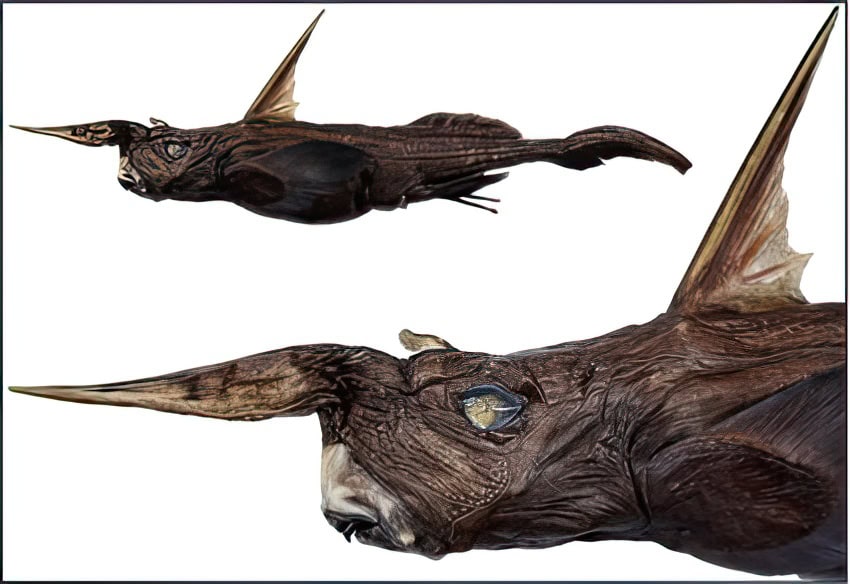
A team of Costa Rican and Brazilian scientists has identified a new species of deep-sea fish living in the Pacific waters off Costa Rica, highlighting how much of our country’s marine biodiversity remains unexplored.
The newly described species, Rhinochimaera costaricana, belongs to a little-known group of cartilaginous fishes known as long-nosed chimaeras, sometimes called ghost sharks. Although related to sharks and rays, chimaeras form a distinct branch of fish that has existed for hundreds of millions of years.
The discovery was published this month in the scientific journal Zootaxa by researchers from Costa Rica’s Fisheries and Aquaculture Institute (INCOPESCA), the University of Costa Rica, and Brazil’s Federal University of Pará.
Scientists based their description on three male specimens collected from Costa Rica’s Pacific waters between 2000 and 2023. The fish were found at depths ranging from 390 to 787 meters (about 1,280 to 2,580 feet), far below the depths reached by most recreational divers.
Researchers compared 49 body measurements from the specimens with data from more than 90 individuals representing the three previously recognized species of Rhinochimaera. They found the Costa Rican fish had a unique combination of traits, including a shorter snout, a taller first dorsal fin and spine, a wider gap between dorsal fins, and fewer tubercles along the tail.
DNA analysis confirmed the findings. Genetic comparisons showed clear differences between the Costa Rican specimens and other known members of the genus, supporting recognition of the fish as a distinct species.
The discovery adds another species to Costa Rica’s marine biodiversity and shows how little is still known about the deep Pacific waters beyond the continental shelf. Scientists noted that new technologies and genetic tools are helping researchers identify species that might previously have been mistaken for known animals.
The species was named Rhinochimaera costaricana after Costa Rica, where the specimens were collected.





