
There are stories that unfold quietly.
They don’t make sensational headlines or end with delegates storming out of the room in protest. They are quieter processes, built through working documents, technical observations, and long hours of discussion. Yet these are often the stories that ultimately shape the future of how we manage our marine resources. The recent meeting of the Scientific Advisory Committee (SAC) of the Inter-American Tropical Tuna Commission (IATTC), held in La Jolla, California, offered one such story.
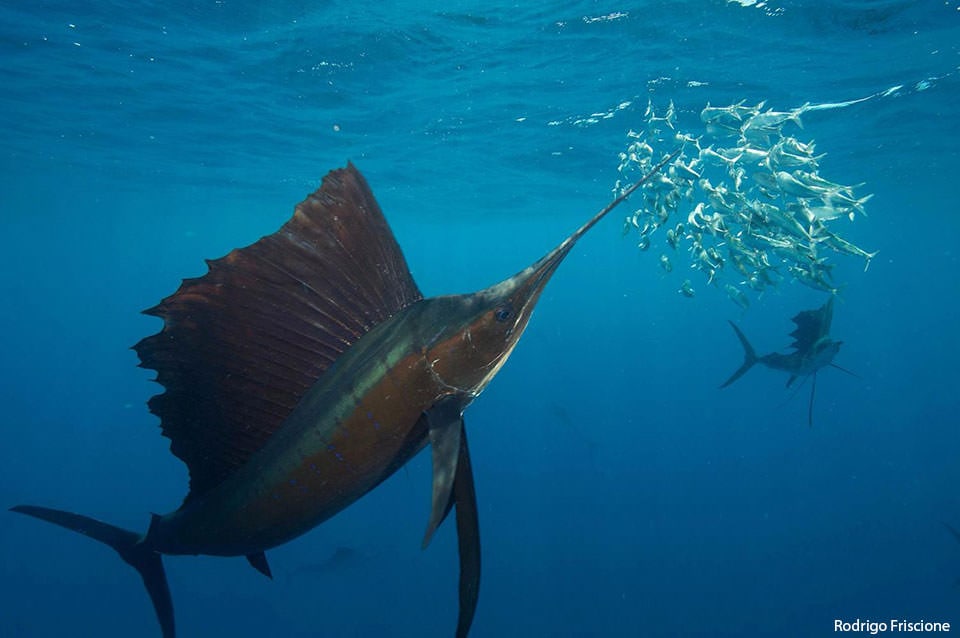
For years, billfish—sailfish, marlins, and swordfish—have not been a priority in regional scientific discussions. The irony is hard to miss. These are iconic species of the Eastern Pacific, fundamental to both recreational and commercial fisheries, vital to many coastal communities, and of enormous economic value to countries such as Mexico, Guatemala, El Salvador, Costa Rica, Panama, Colombia, and Ecuador. Yet it had been a long time since the SAC had issued specific recommendations regarding them. In 2026, Panama decided to change that.
Panama did so by introducing a proposal to establish a Billfish Working Group. More importantly, however, it approached the process with an attitude that would ultimately define its outcome. It did not arrive with an inflexible text, it arrived with an invitation.
The proposal was rooted in a reality that is difficult to dispute, we still know far less about these species than we should. Available information remains limited and fragmented, particularly regarding artisanal, coastal, and recreational fisheries. Without stock assessments, for example, management decisions will always be made on uncertain ground.
As observers of the process, the Costa Rican Sportfishing Federation (FECOP) and the Central American Sport Fishing Alliance (CASA) witnessed a discussion that was serious, technical, and, above all, constructive.
Panama reminded participants of something that too often falls outside the scope of regional assessments, recreational and coastal fisheries also generate valuable information. Incorporating those data is not a symbolic gesture; it is a scientific necessity if we hope to truly understand the status of these species. Both FECOP and CASA also expressed their willingness to contribute information and support efforts to identify resources that could strengthen the process.
Guatemala described the proposal as a scientific priority for the region. Ecuador supported the initiative and suggested moving forward through an externally funded research plan. Mexico emphasized the importance of coordinating efforts with the International Scientific Committee for Tuna and Tuna-like Species in the North Pacific Ocean (ISC) to avoid duplication. Japan insisted on clearly defining the scope of any new initiative. The United States raised practical concerns regarding resources and institutional capacity.
As a result, the proposal evolved.
The initial idea of immediately creating a Billfish Working Group gave way to a broader, stronger, and, above all, more politically viable roadmap. The consensus recommendation called on the IATTC scientific staff, in collaboration with member countries and other interested parties, to develop a work plan for billfish data collection and stock assessments. That plan should clearly identify costs, staffing needs, and potential sources of external funding.
After many years without species-specific recommendations, billfish formally returned to the IATTC’s scientific agenda. But it would be a mistake to believe that the work ended in La Jolla. An equally important phase is only beginning.
This year, the IATTC Annual Meeting in Lisbon will provide an opportunity to transform this scientific recommendation into a political priority supported by more countries and a broader coalition of stakeholders. It is there that the willingness to turn this roadmap into concrete action will truly be tested. And it is precisely at this point that the private sector has an unavoidable responsibility.
For too long, we have treated science and conservation as responsibilities that belong exclusively to governments and international organizations. Yet those of us who depend on the health of these resources—tourism operators, marinas, recreational anglers, businesses, and civil society organizations—must also assume an active role.
Supporting scientific processes means contributing data, facilitating research, helping secure funding, participating in good faith in dialogue, and defending evidence-based decisions, even when they may be uncomfortable. At FECOP and CASA, we believe this is the right path forward.
Because good science needs allies. And good governance requires a private sector that is committed, not merely watching from the sidelines.
Billfish have returned to the conversation. Now it is up to us to demonstrate that we are also prepared to support the answers that conversation demands. After all, the best decisions depend on the best information available. And building that knowledge is a shared responsibility.
Author
Damián Martínez Fernández
Central American Sport Fishing Alliance (CASA)