

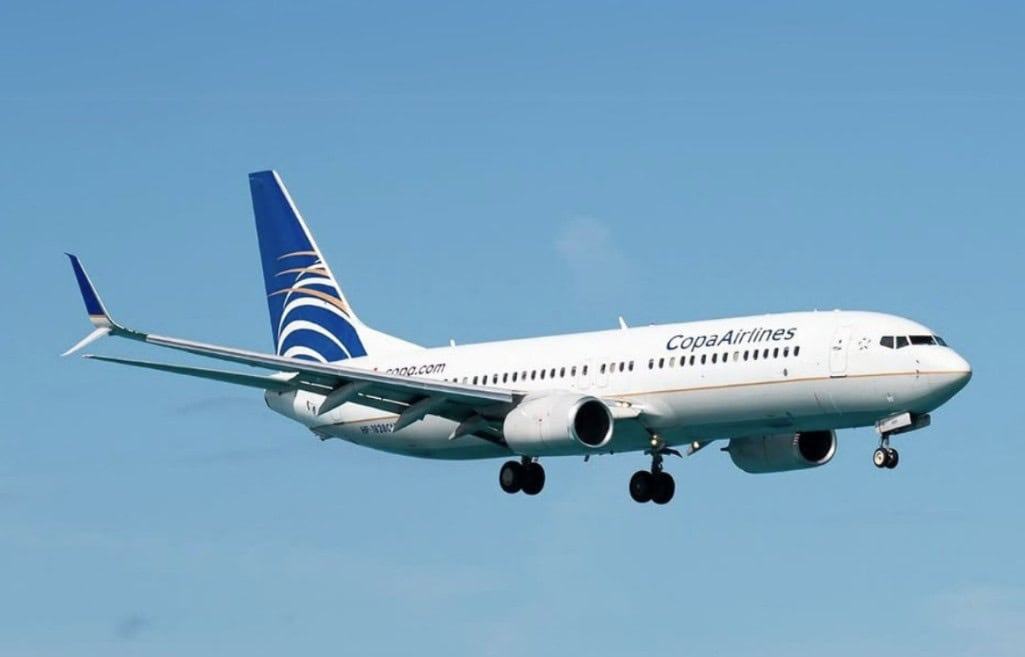
Panamanian airline Copa Airlines has announced an agreement for up to 60 Boeing 737 MAX aircraft, a deal valued at about $13.5 billion at list prices and one of the largest fleet expansion moves in the carrier’s history. The aircraft will be added to about 40 planes already in the delivery process, giving Copa a long-term pipeline of new jets as it prepares to expand its network from Panama’s Tocumen International Airport, home of the Hub of the Americas.
Copa CEO Pedro Heilbron said the new order will help the airline strengthen its regional operation and expand connectivity from Panama across Latin America, the Caribbean and North America. The company currently operates 88 routes in 32 countries through its Panama City hub.
The new aircraft are expected to be delivered between 2030 and 2034. Copa said they may be used both to grow the fleet and to replace older aircraft, depending on the airline’s needs. Boeing said the agreement gives Copa more room to expand its MAX fleet while maintaining the operating efficiency of a largely single-aircraft family.
The deal also gives Copa flexibility to choose between the 737 MAX 8, MAX 9 and MAX 10 models, allowing the airline to match aircraft size and range with demand on different routes. A related engine agreement covers CFM LEAP-1B engines for 40 firm aircraft and 20 options.
Heilbron said the acquisitions will allow Copa Airlines to grow its fleet to more than 200 aircraft by 2034. The company expects passenger traffic to rise from an estimated 20.9 million passengers in 2026 to more than 27 million by the end of the decade.
The agreement was signed in Panama City by Heilbron, Boeing Commercial Airplanes CEO Stephanie Pope, and GE Aerospace chairman and CEO Lawrence Culp. Panamanian President José Raúl Mulino attended the ceremony and called the purchase historic for the country’s aviation sector.
Mulino said the order reflects Copa’s strength and its role in Panama’s regional connectivity strategy. He also said the government is working on expansion and renovation plans for Tocumen International Airport so the facility can keep pace with the airline’s growth.
The first stage of airport work is designed to accommodate the 40 Boeing 737 aircraft already being delivered to Copa. The new order, Mulino said, will require further planning so Tocumen can adapt to the next phase of fleet growth, including runway renovations aimed at improving airport operations and safety.
For those looking to travel to Central America, the announcement points to Copa’s continued bet on Panama as the region’s main air connection point. Tocumen has long served as a transfer hub for passengers moving between Costa Rica, the rest of Central America, South America, the Caribbean and the United States.
Copa’s expansion does not automatically mean new routes or lower fares in the short term, since most of the new aircraft will not arrive until the next decade. But it does signal that the airline expects steady growth in regional travel demand and is positioning itself to carry more passengers through Panama in the years ahead.
The order also comes as Boeing continues to compete for major airline deals worldwide while working to stabilize production of the 737 MAX family. For Copa, the purchase reinforces a business model built around a standardized narrow-body fleet and a high-volume connecting hub in Panama City.





