

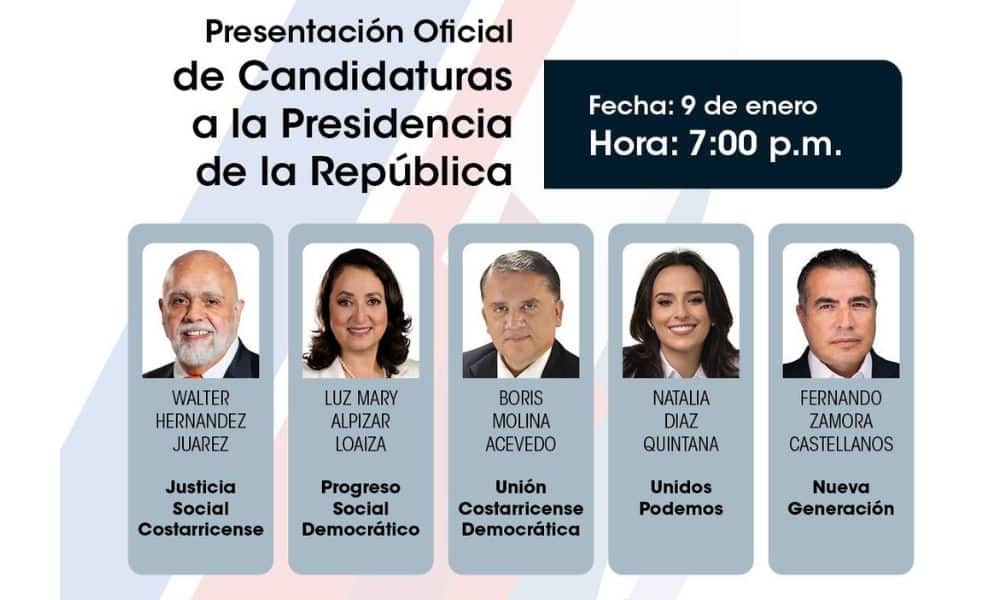
Costa Rica’s presidential candidates squared off in the first official debate hosted by the Tribunal Supremo de Elecciones (TSE) yesterday, marking a key moment in the run-up to the February 1 election. Five aspirants—Walter Hernández Juárez of Partido Justicia Social Costarricense, Luz Mary Alpízar Loaiza of Partido Progreso Social Democrático, Boris Molina Acevedo of Partido Unión Costarricense Democrática, Natalia Díaz Quintana of Partido Unidos Podemos, and Fernando Zamora Castellanos of Partido Nueva Generación—faced off in a two-hour session at the TSE auditorium in San José.
The debate, broadcast across multiple channels including Canal 13 and streamed on TSE platforms, centered on pressing national concerns. Candidates presented their plans in structured blocks covering security, employment, education, health, and cost of living, with time for direct questions that sparked pointed exchanges. They aimed to set themselves apart, highlighting policy differences that could sway voters in a crowded field of 20 contenders.
Security dominated the discussion, as all participants acknowledged the rise in crime as a top priority. Díaz pushed for stronger border controls and judicial coordination, calling for interventions in illegal boarding houses used by criminal groups. She drew a line between migrants contributing to society and those she labeled as threats, saying the country must reject “delinquents and social waste that come to harm us.”
This stance prompted pushback from Hernández, who warned it risked eroding Costa Rica’s tradition of respecting human rights for foreigners. Molina proposed classifying contract killings as terrorism and mobilizing police reservists to bolster forces. Zamora advocated declaring a security emergency to enable judicial reforms and preventive programs in education, culture, and sports. Alpízar stressed bolstering investigations, reforming laws, and directing budgets effectively to law enforcement. Hernández supported the emergency idea to shift funds from finance ministry coffers to police and courts.
On the economy and employment, proposals focused on easing burdens for small businesses and vulnerable groups. Candidates called for streamlined regulations for SMEs, enhanced training through the National Learning Institute to match job market needs, and initiatives to draw investment. They addressed cost of living by promoting energy projects, infrastructure upgrades, and productivity plans to create stable jobs and reduce expenses for families.
Education drew agreement on the need for practical reforms. Participants emphasized connecting public education with regional job demands, expanding dual training models, and establishing centers for technical, scientific, and sports skills to foster social mobility.
Health discussions targeted delays in the system. Candidates backed public-private partnerships to clear backlogs, while preserving the autonomy of the Costa Rican Social Security Fund. They highlighted strengthening primary care through expanded health teams to improve access and efficiency.
The format allowed for challenges, leading to tense moments, particularly on security approaches. Punitive measures clashed with calls for balanced prevention, underscoring divides on migration and rights. In closing, candidates reiterated their visions: Hernández focused on justice and fund reallocation, Alpízar on effective governance, Molina on bold crime classifications, Díaz on firm controls, and Zamora on emergency actions tied to prevention.
This initial encounter sets the stage for three more debates over the weekend, where remaining candidates will tackle similar issues. With elections three weeks away, these forums offer voters a direct look at how leaders plan to steer our nation forward.





