
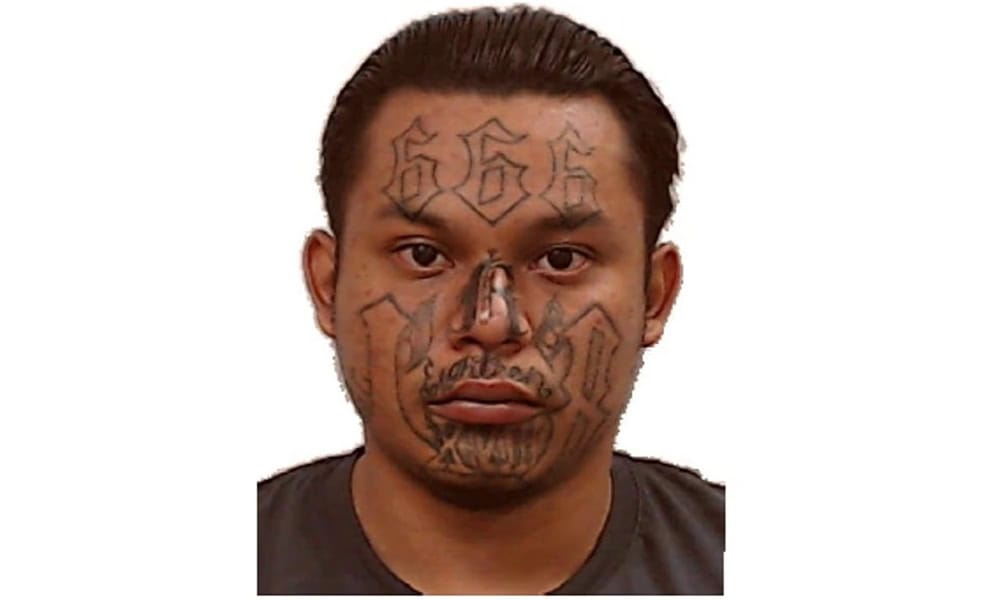
Federal authorities in the United States have detained a high-profile fugitive from El Salvador, exposing gaps in how media portray certain immigration cases. Antonio Israel Lazo-Quintanilla, a documented member of the 18th Street Gang, now faces deportation after his arrest in Maryland.
Officials from Immigration and Customs Enforcement took Lazo-Quintanilla into custody early this month following a routine traffic stop. Local police initially pulled him over for driving without a license, a minor offense that revealed his outstanding warrants abroad. The Department of Homeland Security confirmed his identity as one of El Salvador’s most-wanted gang figures, sought for aggravated homicide, extortion, drug possession, and other felonies.
Lazo-Quintanilla’s forehead bears a prominent “666” tattoo, a symbol tied to his gang affiliation. The 18th Street Gang, also called Barrio 18 or Mara 18, started in Los Angeles during the 1960s and expanded into Central America, where it drives much of the region’s organized crime and violence. El Salvador classifies the group as a terrorist organization, a designation echoed by U.S. officials under recent administrations.
The arrest spotlights debates over immigration enforcement priorities. DHS Assistant Secretary Tricia McLaughlin pointed out that many arrested by ICE lack U.S. criminal records but pose significant risks due to foreign crimes. She noted that 70 percent of ICE detentions involve individuals charged or convicted domestically, yet cases like this target those who evade local detection.
Media coverage often labels such individuals as non-criminals based on their clean U.S. slates, a narrative McLaughlin rejected. She stressed that enforcement focuses on preventing harm by removing threats before they act locally. This approach, she said, counters claims that ICE overlooks serious offenders.
In El Salvador, President Nayib Bukele’s aggressive anti-gang policies have jailed over 80,000 suspected members since 2022, slashing homicide rates by more than 70 percent. However, critics argue these measures push some fugitives northward, complicating security for neighbors like Costa Rica. Gang remnants sometimes cross borders, fueling extortion rackets and violence in transit countries.
Costa Rican officials have ramped up cooperation with U.S. and Salvadoran counterparts to track such migrants. Recent joint operations disrupted smuggling networks linked to Barrio 18, protecting communities from spillover effects. For Ticos, these arrests offer relief, as Central American instability often influences local migration flows and crime patterns.
Lazo-Quintanilla entered the U.S. illegally at an unspecified time and location, with no prior domestic arrests until now. He remains in ICE detention awaiting removal proceedings, which could lead to extradition. If returned to El Salvador, he faces prosecution under strict anti-gang laws, potentially resulting in decades behind bars.
This incident fits a broader pattern of U.S. efforts to deport foreign criminals. Federal data show hundreds of thousands of immigration enforcement actions annually, prioritizing those with warrants or gang ties. In fiscal year 2025, ICE has already removed thousands with similar profiles, bolstering bilateral ties with Central American governments.
The case also highlights routine policing’s role in uncovering hidden dangers. A simple license check unraveled Lazo-Quintanilla’s presence, averting potential threats. Maryland, home to diverse immigrant groups, hosts frequent ICE activities, including partnerships with state law enforcement.
As deportation numbers climb under current policies, discussions persist on balancing security with due process. Advocates warn of overreach, while supporters praise removals for safeguarding residents. In Central America, leaders like Bukele hail these collaborations as victories against transnational crime.
For Costa Rica, the ripple effects matter. Gangs like Barrio 18 have attempted incursions here, prompting enhanced border measures and intelligence sharing. Local police have arrested suspected members in recent years, often tied to drug trafficking or human smuggling.