Each species that inhabits Costa Rica’s varied landscapes lives a full life eating stuff, trying not to be eaten by stuff, and looking for the right opportunities to pass their genes on to the next generation. A few good books, some wildlife documentaries, and the proper use of a search engine can provide you with a wealth of information about the behavior of a huge range of species that you’re unlikely to see firsthand.
My interest in the secret lives of wild creatures demands more than learning about the observations of others, I want to see what’s going on for myself. In that vein, I’ve spent the last several years tramping around the forests of Costa Rica attaching motion-sensor cameras to trees in an attempt to see just exactly what’s going on in the forest when nobody’s looking.
Many of the videos are remarkably unremarkable – the deer walks by, or the coati says squeak. After a few years and a few thousand videos, I’ve started to see some repeat behavior in a few species that folks who clicked on an article entitled “The Secret Lives of Costa Rica’s Wildlife” may find interesting.
Pumas Have Their Heads in the Clouds
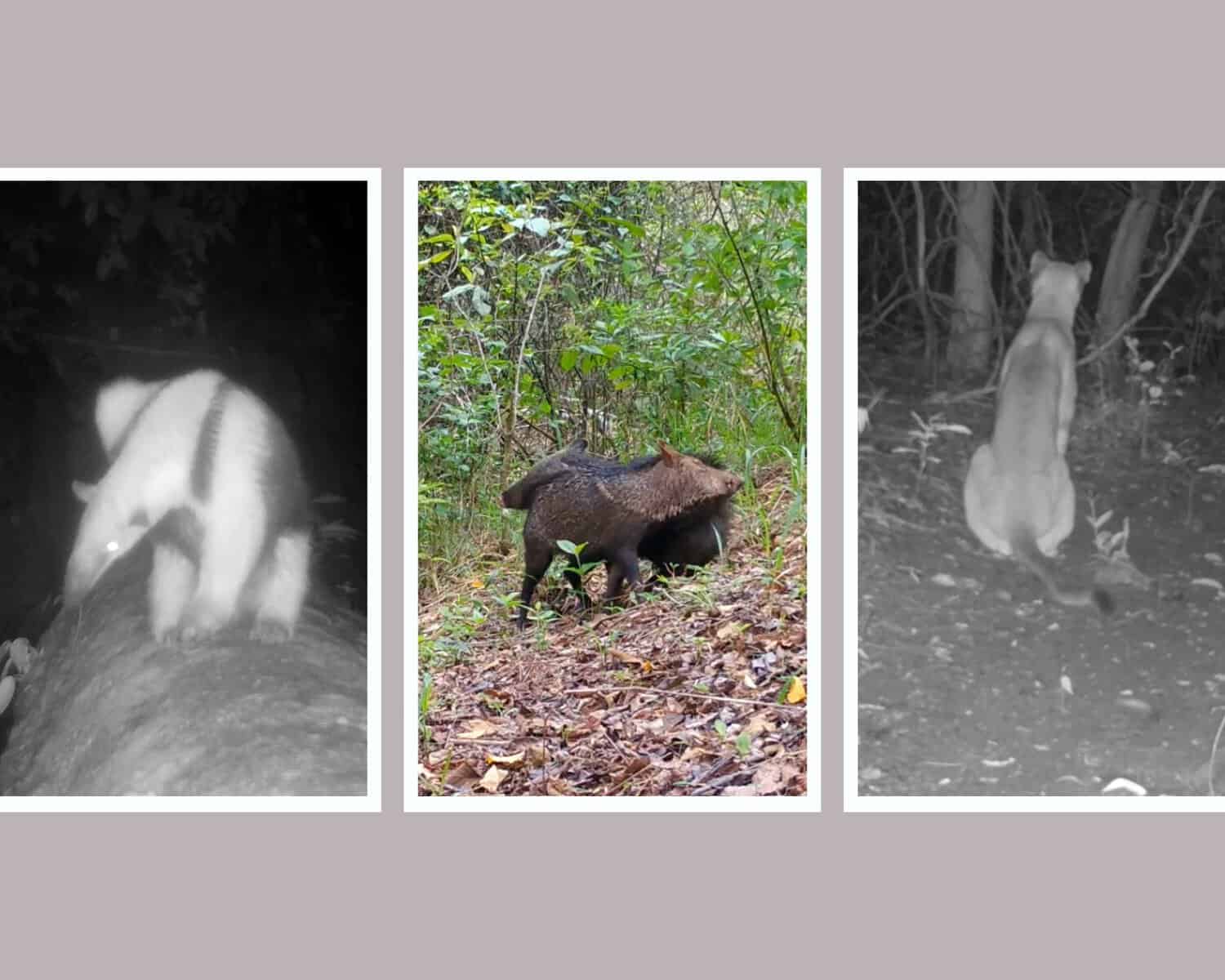
Pumas are Costa Rica’s second largest species of cat. They’re found throughout the country in a wide range of habitats. I’ve recorded pumas in dry forests and wet forests, in areas with large tracts of pristine habitat and in areas with plenty of people living nearby. Something I’ve started to notice is the frequency of videos that show a puma looking skyward.
Sometimes they’re having a stroll peering into the trees, looking this way and that, sometimes they’ll take a seat to really give something a long stare. I believe I’ve recorded this behavior quite frequently because some of the puma’s favorite prey items are arboreal. A study in Corcovado detected monkey remains in 4 out of the 11 puma scats that they analyzed.
Tamanduas are Itchy
Northern tamanduas are also known as collared anteaters. Any information source worth it’s salt will tell you what their name implies, anteaters eat a lot of ants. An analysis of their diet shows they could just as easily be called collared termite-eaters, because researchers found that they consume an average of about 9,000 ants and termites per day. They use their powerful forearms to rip into ant and termite nests and lap up the occupants with their long sticky tongues.
An interesting behavior that my camera traps have documented is a consequence of all of this nest raiding – tamanduas rearing up on their back legs and scratching themselves like crazy, trying to rid themselves of the soldiers from recently raided colonies.
Collared Peccaries Rub their Heads on Each Other’s Butts
Collared peccaries are the smaller and more common of Costa Rica’s two peccary species.
Two facts about collared peccaries that seem unrelated but aren’t:
1) They are herd animals
2) They stink
They live throughout the country in groups ranging from a few individuals to 30 members strong. They also come equipped with a scent gland on their lower backs that produces a skunky musk. How are these two facts related? Well, they stand head to butt and rub their heads on each other’s scent glands as a form of stinky group solidarity. I’ve recorded this smelly display several times over the years.
As much as I’d like to spend the majority of my time sitting alone in the forest documenting the fascinating little behaviors of all of the animals I love, it has proven to be unpractical (thanks a lot wife and kids).
The next best thing is using my camera traps to catch little glimpses of their lives in their natural environment. I’m happy to share a few glimpses of pumas gazing upwards, tamanduas scratching like crazy, and collared peccaries rubbing their stink all over each other in the video below.
Vincent Losasso, founder of Guanacaste Wildlife Monitoring, is a biologist who works with camera traps throughout Costa Rica. Learn more about his projects on facebook or instagram. You can also email him at: vincent@guanacastewildlifemonitoring.com