
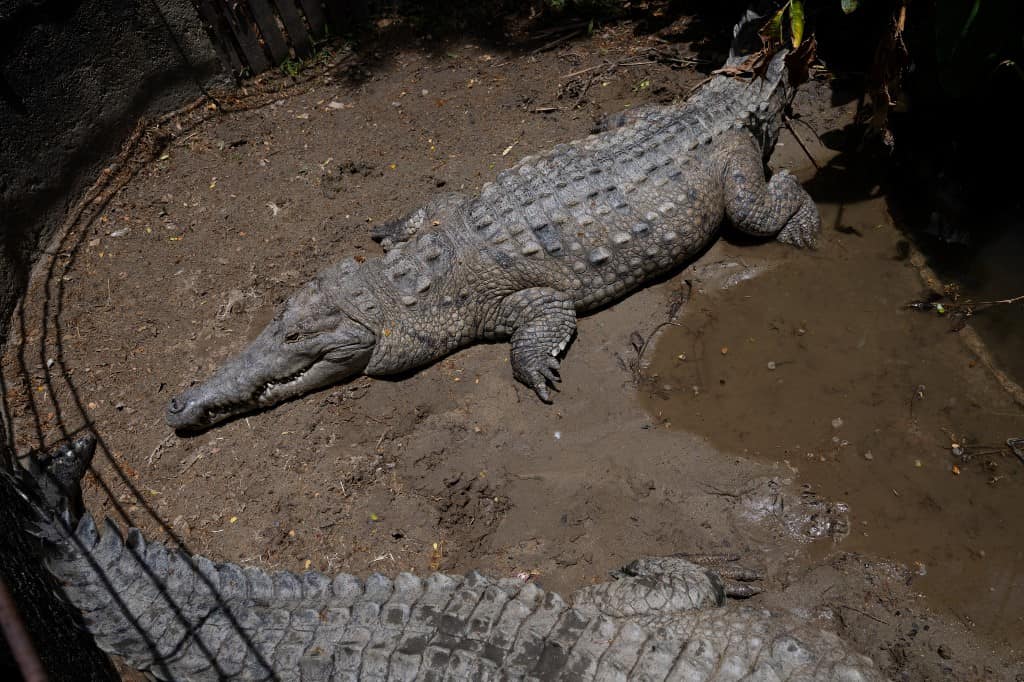
In an effort to save the critically endangered Orinoco crocodile, a group of 160 individuals raised in captivity were released into the Capanaparo River that crosses Venezuela and Colombia.
Also known as the llanero crocodile, this species is native to the plains of both countries and can grow over 6 meters long and weigh up to 400 kg. According to the International Union for Conservation of Nature (IUCN), the Orinoco crocodile is in critical danger of extinction, just one step away from disappearing from its natural habitat.
The captive breeding of this crocodile started in Venezuela in 1990 with state and private projects. However, despite releasing more than 10,000 individuals in the last 33 years, the populations have remained stagnant.
According to the Foundation for the Development of Physical, Mathematical, and Natural Sciences (Fudeci), one of the organizations supporting the program that led to the release of young individuals on Sunday, April 30, there are only about 100 adult females in the wild in Venezuela.
The Orinoco crocodile, or Crocodylus intermedius, was pushed to the brink of extinction in the first half of the 20th century due to the hunting of its prized skin. Over 2.5 million skins were exported from Venezuela between 1931 and 1934, according to official figures. Although the trade of their skin is now banned, the species continues to face threats such as the consumption of its meat and eggs and pollution of rivers and streams.
The release of the 160 individuals was a major milestone for the conservation of this species. The young individuals were bred in captivity in two centers, a zoo in Turmero, Aragua state, and a ranch in Masagüaral, Guárico state.
The former was founded by Leslie Pantin and is now managed by his son Federico Pantin and his wife, Tuenade Hernández. The Pantin zoo is a breeding center for the conservation program, and the nearby ranch is where the young individuals are caught as they hatch from eggs and then raised until they are ready to be released.
The young crocodiles spend a year at the zoo before being released, and over 95% of them survive. In contrast, most crocodile hatchlings in their natural habitat are preyed upon by birds, fish, and other reptiles.
The small crocodiles were kept in tanks awaiting transportation to the river. The eggs from the fertile pair of crocodiles – around 40 per clutch – are incubated in sand buried 33 centimeters deep and kept at 30 to 34 degrees Celsius and 85 to 90% humidity for around 90 days until they hatch in May.
While the release of these crocodiles is an important step for the conservation of the species, there is still much work to be done to ensure their survival. Federico Pantin stated, “We do our part, okay, raising the animals, breeding them, and releasing them, but from there, it no longer depends on us. There has to be protection, surveillance, control, and environmental education.”
Furthermore, Diego Bilbao, director of Río Verde, an organization that organizes tours to see the crocodiles, emphasized the potential for ecotourism as a means to protect the species. By perceiving the crocodiles as a source of income, local communities, including indigenous groups, can be incentivized to protect them.