

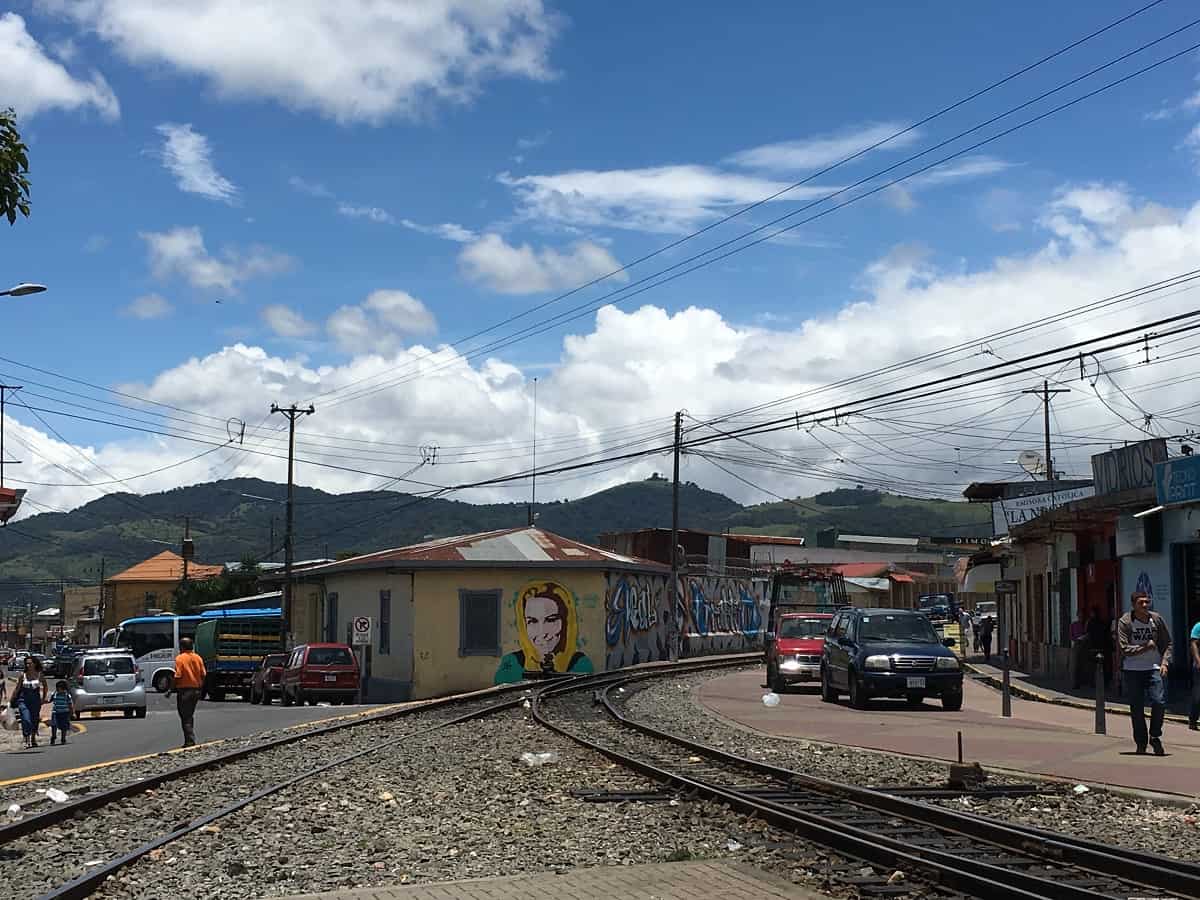
For tens of thousands of commuters who depend on the train between San José and Cartago, this Monday brought welcome news. The Costa Rican Railway Institute, or Incofer, announced the resumption of train service on the San José–Cartago route and the Pacífico–Atlántico connection as of April 13, following the completion of major works on railway bridges. It marks the end of an interruption that had left Cartago residents without their most affordable commuting option for nearly three weeks.
The suspension on the Cartago–San José route had been in effect since March 25 as part of the Emergency Program for Comprehensive and Resilient Infrastructure Reconstruction, known by its Spanish acronym PROERI. The works involved eight railway bridges across the Greater Metropolitan Area, or GAM, as well as a tunnel in the canton of Goicoechea.
Incofer had strategically timed the bulk of the suspension to overlap with Holy Week, when ridership traditionally drops, in order to minimize the impact on regular passengers. Users of the Pacífico–Atlántico connection had been without service since April 6.
The specific structures that received major interventions include the Museo–San José bridge in the Catedral district, the El Fierro bridge in La Unión, the west exit bridge at Atlántico Station, the Calderón tunnel in Goicoechea, the Los Negritos bridge in San Pedro, the El Español bridge in Curridabat, the VICESA bridge in San Nicolás, and the Oreamuno and San Nicolás bridges in Cartago.
These were not routine maintenance stops. Incofer had classified this infrastructure as presenting an imminent risk, making reconstruction essential to guarantee the safety, resilience, and continuity of rail service in the country. After an intense and committed effort within the PROERI program, in which eight railway bridges were intervened, we are announcing that as of Monday, April 13, we will be operating on all our passenger routes, Incofer stated.
The return of the Cartago service matters for reasons that go well beyond the inconvenience of a temporary suspension. The San José–Cartago line is Incofer’s longest route, running more than 23 kilometers with 10 stops and connecting Atlántico Station in the capital to Plaza Paraíso in Cartago.
For many in the province, including students, hospital workers, and office employees, the train is not a luxury but a lifeline, offering a punctual, affordable, and congestion-free alternative to a road network that suffers some of the worst traffic in Central America.
The fare on the San José–Cartago route is just 705 colones, with senior citizens riding free. That price point is critical in a country where the cost of living has risen considerably and where lower-income commuters have few alternatives to the bus or private car. When the train stops, those passengers bear a disproportionate burden.
The rehabilitation of these bridges also carries significance beyond the immediate moment because it is part of a much larger story about where Costa Rica’s rail system is headed. Last September, Incofer secured full financing of US$800 million for the construction, equipment, and launch of Lines 1 and 2 of an electric train system for the GAM through a strategic alliance involving the Central American Bank for Economic Integration, the Green Climate Fund, and the European Union through its Global Gateway initiative. The BCIE is contributing US$550 million, while the European Investment Bank is adding a further US$250 million.
The electric train project envisions two double-track lines totaling more than 51 kilometers, one from Paraíso de Cartago to San José and another from San José to central Alajuela, along with 28 new electric units, 30 stations, two new terminals, and nine grade crossings. Trains are expected to run every 10 minutes, seven days a week.
Seen in that light, the bridge works completed this week are not just a repair job. They are part of the foundation for a far more ambitious vision of urban mobility. A Costa Rica that aspires to run a modern electric train through its metropolitan core cannot afford to let its existing rail infrastructure crumble. The PROERI works, disruptive as they were, represent a necessary and overdue investment in the bones of a system that many commuters are counting on, now and in the years ahead.





