
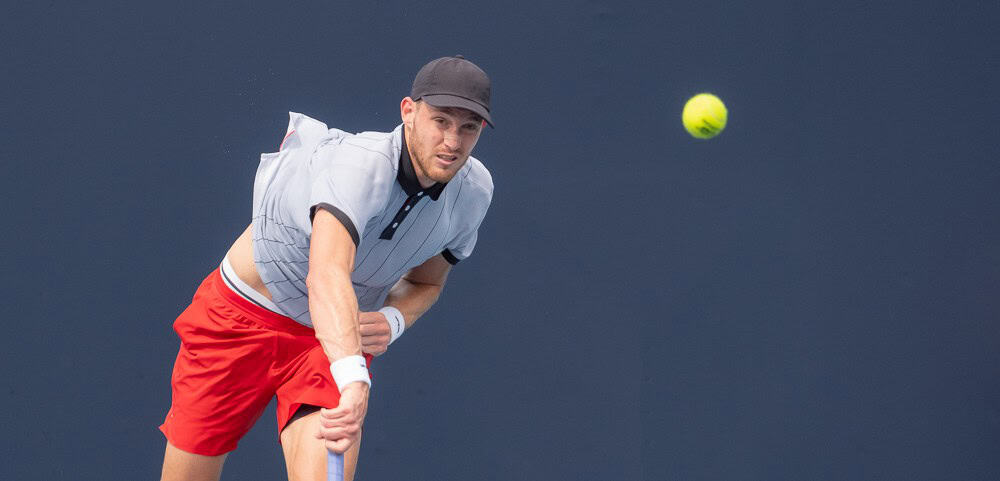
On the tennis courts of San José, young Costa Rican players chase futures shaped by a surface few here know as home. At the annual Copa del Café junior tournament, held each January at the Costa Rica Country Club in Escazú, teenagers from around the world battle on hard courts that mimic the speed of Melbourne or New York.
For locals like 17-year-old Lucia Gallegos or rising star Alexandra Korneva, who claimed an ITF J30 title in San José late last year, these matches offer rare glimpses of the global game’s demands. But for many Latin American players, including those from Central America, the shift from familiar red clay to unforgiving hard courts remains a steep climb—one that tests not just skills, but entire careers.
Tennis in Latin America has long rooted itself in clay. Public clubs from Argentina to Colombia line their courts with the rusty dirt that slows the ball, rewards spin, and forgives small errors. Junior events and regional circuits reinforce this, teaching patience, high-bouncing rallies, and the art of wearing down opponents over hours.
It’s a style that produces resilient athletes, comfortable with shoulder-high forehands and endless baseline exchanges. Yet when these players step onto the ATP or WTA tour, they confront a schedule heavy on hard courts, where the biggest titles—from the Australian Open to the US Open—await.
This mismatch explains why so many Latin talents shine on clay but falter elsewhere. Take Argentina’s Francisco Cerúndolo, ranked No. 21, who has claimed titles on both surfaces but often cites the need to adjust his timing after clay-heavy stretches. Or Chile’s Nicolás Jarry, whose powerful serve suits hard courts, yet injuries and inconsistent results have dropped him to No. 121. Brazil’s João Fonseca, at just 19, broke through in 2025 with wins in Buenos Aires (clay) and Basel (indoor hard), showing adaptation is possible—but rare without early exposure.
The core issue lies in habits formed young. Clay allows time: a missed shot by inches might extend the point, late footwork can recover, and serves start rallies rather than end them. Players develop heavy topspin, strong defense, and the grit for marathon matches. These traits serve well in Bogotá or Santiago, but on hard courts, where balls skid low and fast, they turn into hurdles. Points end quicker, often decided by the first two shots. A defensive stance deep behind the baseline, smart on clay, invites aggressive opponents to dictate play.
Adapting requires rewiring instincts. Players must step forward, contact the ball on the rise, and compact their swings for cleaner strikes. Returns shift from defensive chips to aggressive blocks. Serves become weapons, setting up one-two punches rather than neutral openers. Physically, the toll mounts—hard courts jar joints with each step, accelerating wear on knees and backs compared to clay’s softer give. For athletes used to long, forgiving sessions, this can lead to nagging injuries and eroded confidence.
Access compounds the problem. In countries like Costa Rica, high-quality hard courts are scarce outside elite clubs or events like the Copa del Café. Most juniors train on clay or whatever’s available, with match experience on hard coming late—if at all. Travel costs bite hard; families scrape together funds for international trips, where stronger competition on varied surfaces exposes gaps. Even in powerhouse nations like Argentina or Brazil, the regional circuit stays clay-focused, delaying the reps needed to build hard-court feel under pressure.
Recent debates in South America highlight the stakes. Tournament directors for the Golden Swing—the February clay series in Buenos Aires, Santiago, and Rio de Janeiro—push to switch to hard courts. Chile Open’s Catalina Fillol argues clay deters top pros fresh off the Australian Open, who prefer surfaces aligning with Indian Wells and Miami.
Acapulco made the change in 2014, boosting its draw with stars like Novak Djokovic and Rafael Nadal. Rio’s Luiz Carvalho eyes the Olympic Tennis Center’s hard courts to upgrade his event, potentially drawing bigger crowds and points. Yet critics worry this erodes Latin tennis’s identity, disadvantaging locals who thrive on clay.
For players, success stories prove the gap can close. Colombia’s Camila Osorio, ranked around No. 80, upset Maria Sakkari at the 2025 Australian Open, blending her clay roots with sharper hard-court tactics. Brazil’s Beatriz Haddad Maia reached Grand Slam semis, her doubles net skills aiding quick point finishes. These athletes often relocate for training—Europe or the US—honing forward positioning, serve patterns, and calm in short exchanges. They build dual styles: clay’s endurance paired with hard’s aggression.
In Costa Rica, the picture mirrors the region’s struggles but with added isolation. No Tico has cracked a Grand Slam main draw recently; top male Jesse Flores hovers outside the ATP top 1,000, competing in Futures and Davis Cup. Juniors show promise—Gallegos reached quarters in local ITFs, Lozano pushed seeds in qualifiers—but limited funding and courts hinder progress. The Costa Rican Tennis Federation hosts ITF events to provide wildcards and clinics, yet players balance school with sparse international play.
To compete globally, early hard-court focus is key. Coaches here could emphasize drills for early contact, compact swings, and serve-plus-one sequences. Strength programs targeting joint resilience would help withstand the surface’s demands. Expanding local hard-court matches, perhaps through more national tournaments, could build instincts without draining budgets. One federation bucking the trend: Argentina’s, which invests in overseas camps, producing all-surface threats like Cerúndolo and Sebastián Báez.
Clay lays a solid base—teaching smarts and stamina that hard courts alone might miss. But the tour’s reality favors speed and power. Latin players who add that edge don’t ditch their roots; they expand them, turning potential pitfalls into strengths. For Costa Rica’s next generation, events like the Copa del Café aren’t just competitions—they’re bridges to a wider world, where clay childhoods meet hard-court truths.