

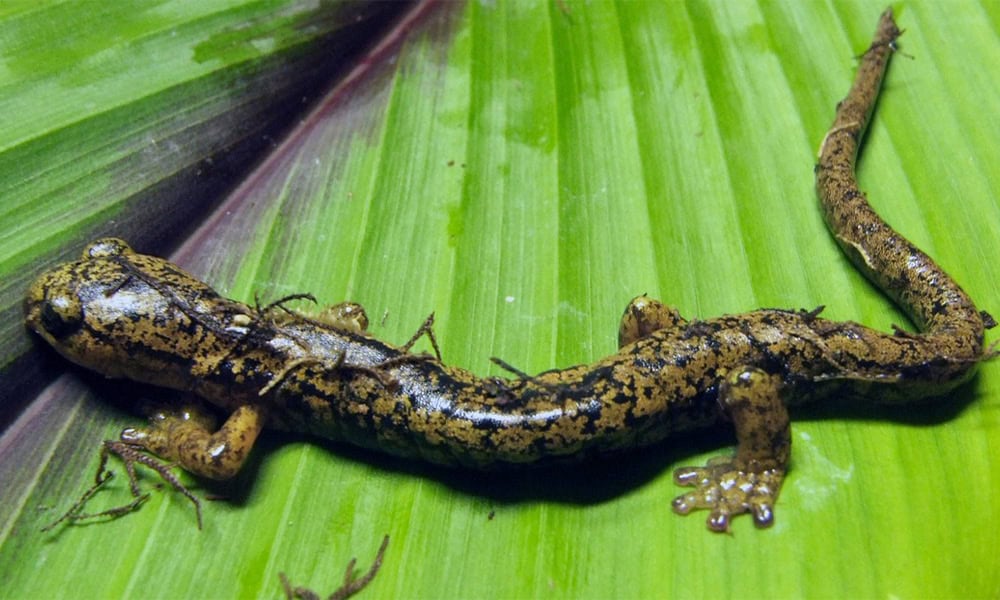
As a Costa Rican, I’ve always known our little country punches above its weight when it comes to nature. Now, we’ve got two more reasons to brag: Bolitoglossa chiquitica and Bolitoglossa silentium, tiny salamanders we’ve just discovered in our own Talamanca Mountains. With these finds, Costa Rica claims 58 salamander species, putting us sixth in the world for these quirky amphibians—pretty impressive for a place closer to the equator than the cold northern forests where they usually hang out.
These newcomers live high in Talamanca’s misty peaks, a wild corner of our country that keeps surprising us. B. chiquitica popped up in 2013 after a tough five-day trek up Cerro Utyum on the Caribbean slope. B. silentium—named for our silent valleys—first showed itself back in 2008 during an eight-hour hike to the Valle del Silencio Biological Station. We’ve only spotted four of chiquitica and two of silentium. “They’re like finding needles in a haystack,” said our own Erick Arias, a researcher who’s been exploring Talamanca’s jungles for years.
Unlike frogs we see in our streams, these salamanders skip the tadpole stage, hatching straight from eggs as mini adults. They don’t even have lungs—breathing through their skin, soaking up the damp air we know so well in our forests. They’re part of the Bolitoglossa family, stretching from Mexico to Brazil, hunting bugs to keep pests down while feeding birds and lizards in our food chain.
It took years to prove these were new to science. After first sightings, we paused—needing more proof. Expeditions to Cerro Echandi and even Panama’s Cerro Fábregas helped us compare them to others, confirming they’re ours to claim. “Talamanca’s diversity is something we all feel proud of,” one researcher said, “but without knowing what’s here, how do we protect it from disappearing forests or hotter days?”
For us Ticos, this is a call to cherish what’s in our backyard. Talamanca might not get the hype of Arenal or Manuel Antonio, but it’s a goldmine for science and anyone who loves our wild side. There’s more out there, and we need to keep looking—and guarding it. Next time you’re in the highlands, peek under a leaf—you might spot one of these shy, skin-breathing wonders we’re just getting to know!





