

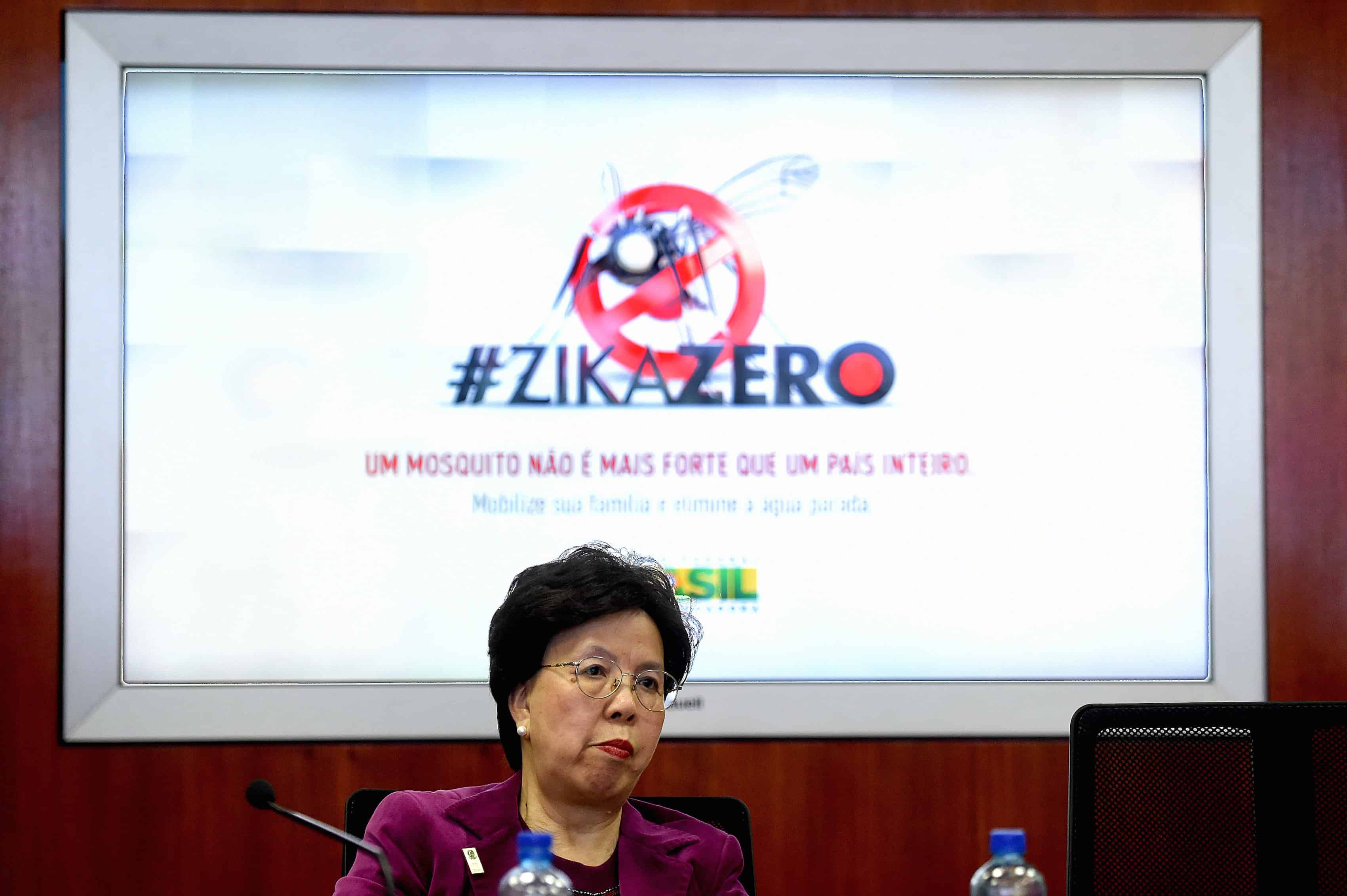
RIO DE JANEIRO, Brazil — The Zika virus, believed to be linked to the serious birth defect microcephaly, presents a “formidable” challenge that will be hard to stamp out, World Health Organization chief Margaret Chan warned Wednesday.
Calling mosquito-borne Zika a “bigger menace” than any other recent major health scare in terms of its geographical spread, Chan said tough times lie ahead.
The situation “could get worse before it gets better,” she said in Rio de Janeiro after a fact-finding mission to Brazil, the epicenter of the Zika outbreak.
Chan said part of the challenge in fighting the virus is that it is so “mysterious.” Even the link to microcephaly remains not fully proven.
“We are dealing with a tricky virus, full of uncertainties, so we should be prepared for surprises,” she said.
Chan said that up to 46 countries have reported some level of evidence of Zika infections and that 130 countries are home to the Aedis aegypti mosquito that carries the virus, meaning the eventual spread could be enormous.
While vastly more lethal, the Ebola virus hit only nine countries, and the severe acute respiratory syndrome (SARS) affected 26 countries, she noted.
In nearly all Zika cases, symptoms are mild, resembling those of flu. However, the growing belief that Zika can also trigger microcephaly in babies born to mothers infected while pregnant has spread international alarm.
Chan said the WHO, Brazil and other governments in the region hosting the Aedis aegypti mosquito are working on the assumption of a link.
“Zika is guilty until proven innocent,” she said.
See also: Costa Rica’s tourism sector seeks to calm fears of Zika virus
‘Heinous epidemic’
International health officials traveling with Chan described the Zika outbreak as especially scary because it is so poorly understood.
“You are dealing with an awful disease and awful consequences and awful uncertainty. We are learning as we go,” said Bruce Aylward, head of WHO’s outbreaks and emergencies department.
“You are dealing with a threat to the children of the country, to the future potentially, to the economy — and it takes an extraordinary response,” he said.
Carissa Etienne, director of the Pan American Health Organization (PAHO), described “a really heinous epidemic, a heinous virus.”
But officials praised Brazil for its response, saying that Latin America’s biggest country was providing world leadership on a problem that will only spread.
“We have been impressed by what has happened in Brazil,” Etienne said.
Despite fears that the Zika virus could disrupt travel plans to the Olympics being staged in Rio in August, Chan said people should still visit, noting the Games will take place in the southern hemisphere’s winter when there are far fewer mosquitoes.
“I was invited to come, so I look forward to coming back,” she said.
Where next?
Brazil is the main focus of the regional outbreak, with 1.5 million people infected, and authorities have also recorded a spike in microcephaly, a congenital condition that causes abnormally small heads and hampers brain development.
On Tuesday, Brazil’s health ministry reported 583 confirmed cases of babies with microcephaly since October, compared to an annual average of 150.
That was a 14.7 percent rise over the number of confirmed cases the previous week, and authorities were investigating another 4,107 possible cases.
An estimated 120 babies have died due to the birth defect, the ministry said.
Although most cases have been in the northeast, which Chan visited during her Brazil tour, that could change, she warned.
“Don’t be surprised to see microcephaly reported in other parts of Brazil,” she said.
And Chan said the next country the WHO is watching “very carefully” is Colombia, where health officials are monitoring to see whether a Zika outbreak will also lead to a Brazil-like surge in microcephaly.
Last week, Colombian authorities said they had registered 37,000 Zika infections, including in more than 6,300 pregnant women.





