
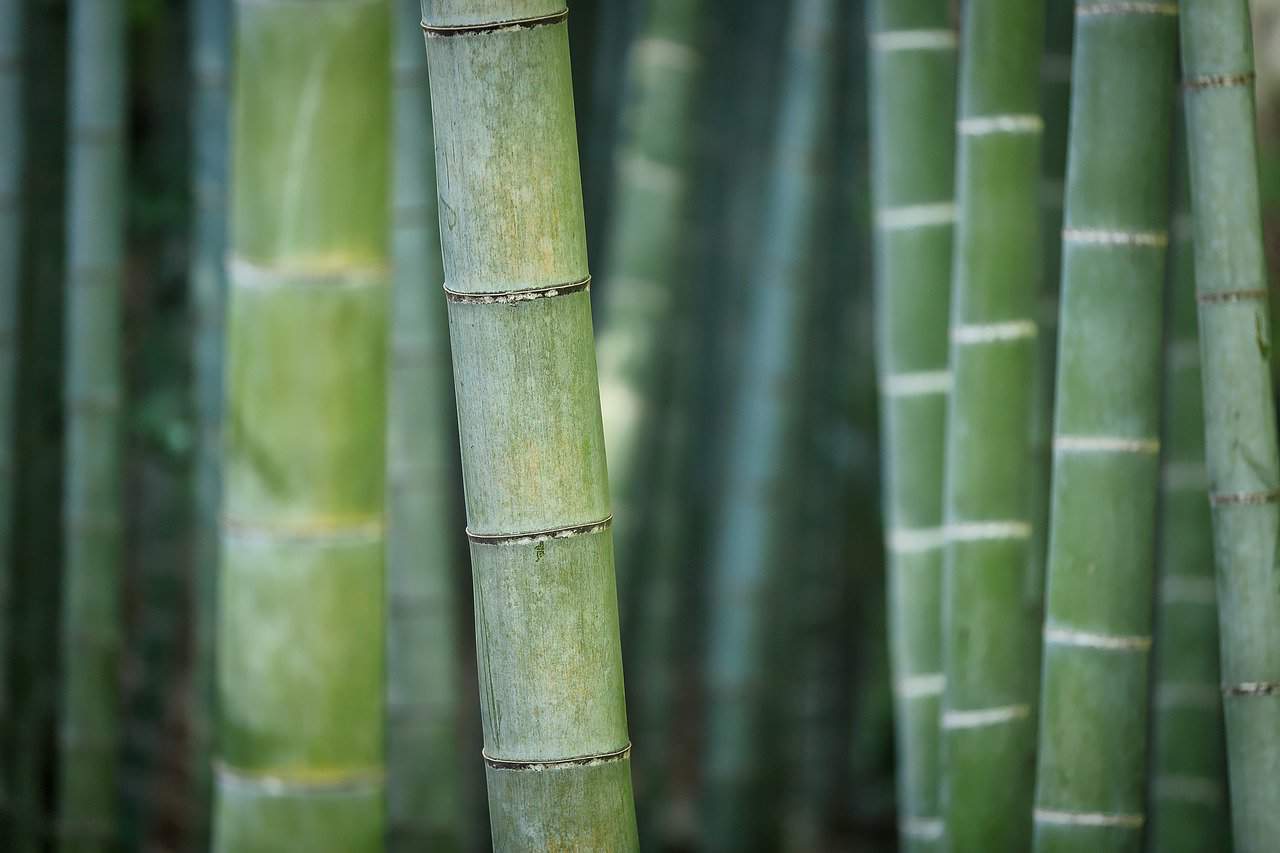
This is the time of year when bamboo populations are on the increase, when the tips of fresh new culms pushup briskly from the earth. Fat, skinny, black, brown or green, they grow with tremendous vitality towards the light. They look like projectiles rooted in the soil and are a surprising testimony to the great regenerative forces of nature. In an age of diminishing resources, this lively renewal is a balm to the soul.
There are two basic types of bamboo: clumping and running. In Guápiles, a town on the Caribbean slope, the persistent heat and rainfall make clumping bamboo the ideal choice for the garden. This type of bamboo stays where you put it, while the running type of bamboo is much more invasive. For those with small areas to plant and property lines to respect, a clumping bamboo is best because it is self-limiting and does not make for quarrels with neighbors.
Clumping varieties come in a range of sizes from graceful diminutives to giants 30 meters (98.5 feet) high. There are varied shades and sizes of foliage and thick or thin culms in yellow, green, black, tan, gray or stripes. There are 30 of these species in my garden, which I call “La Magda.”
In Costa Rica, there are many kinds of bamboo available, but a good many of them are exotic species from other parts of the world. Even the most common bamboo, Bambusa vulgaris, is a native of Madagascar and was introduced here to be used for props in banana plantations, a practice that has since been superseded by aerial cables and plastic twine.
There are species native here, particularly those of the genus Chusquea found along the Cerro de la Muerte (the highest point of the Inter-American Highway south), but they often lean or clamber on other plants and thus do not make good freestanding specimens in the garden.
Guadua is another type of bamboo to be found in Costa Rica, mainly in plantations, and has been used extensively in construction.
The 18 trusses supporting my workshop roof are made from guadua strips and have a 30-foot span. Because they have been treated, termites and powder-post beetles (polilla) won’t touch them. The same strips can be used for moldings in interiors, for ceiling or wall treatments, for shutters or even for floors (imported from China).
The poles can also be opened out and flattened (esterilla) to be used as a wall or ceiling covering. I am a bamboo craftsman, so it’s not surprising that I live surrounded by exotic bamboo plants and that my house and workshop are full of furniture made from the same.
I live with bamboo year-round, inside and out, and I never tire of its soft foliage in the garden, nor run out of inspiration from it in the shop. It’s a hardy, benevolent plant that always has more to give.
Guadua is my bamboo of choice in the workshop. It is strong and sturdy, thick-walled and not very prone to splitting.
Since it is treated against insect attack, it is a reliable as well as an attractive material for making furniture. Most of my furniture design work is based on the use of guadua strips combined with round bamboo, because the parallel edges of the strips introduce the possibility of some regularity or standardization in the otherwise always-undulating measurements of round bamboo.
Different types of beds, tables, dining chairs, easy chairs and couches, room dividers, benches and wall planters are some of the things that can be made to order with guadua bamboo.
Working with the client, I can usually come up with just the right proportions, just the right look to fit the need. Bamboo gives an out-of-the-ordinary accent to any room, and lends an exotic, organic grace that otherwise might be missing.
In the end, bamboo’s uniqueness lies in its ability to be both gracefully ornamental and sturdily utilitarian. Though often overlooked, bamboo offers great regenerative power – both for nourishing ecosystems and for kindling the human spirit.