
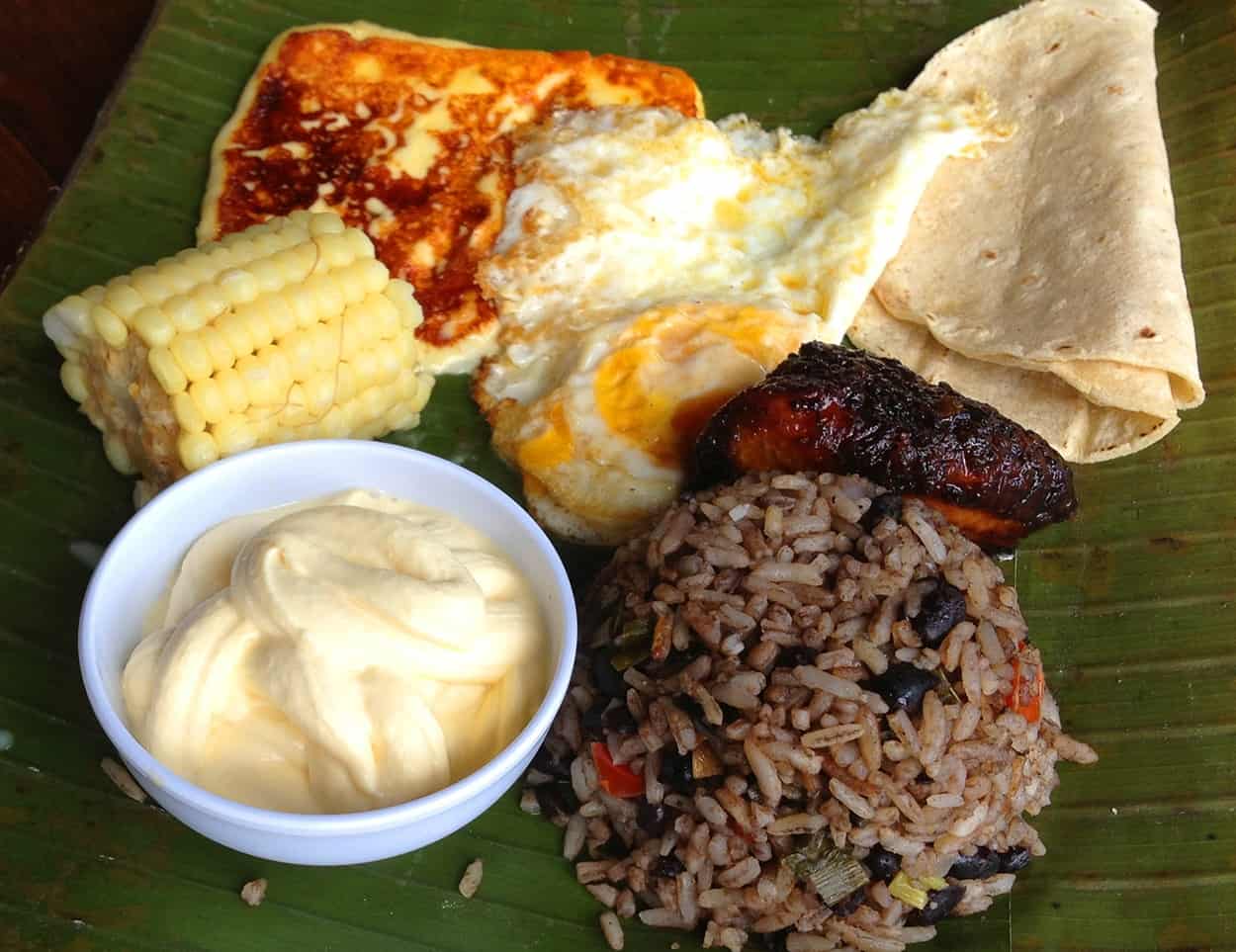
I’ve been cooking gourmet meals for the whole household, but, you know, I think they would just as soon eat gallo pinto. I’m not going to do it anymore.”
The person speaking was a Canadian married to a Tica friend of mine. My friend and my husband had left us alone to speak English while they visited in Spanish.
“At least they’ve been eating it,” I replied. “My husband won’t even touch my lasagna, a dish for which I’m famous among my friends and relatives in the States.”
All right… those of us who live here all know that when we get together, we tend to complain about either the Ticos or their beautiful country. I sometimes imagine that when they get together, they tend to complain about us, as well. It’s normal, and despite the fact that I have been witness to a few virulent and unjustified attacks, in most cases it’s harmless, even affectionate.
Food, of course, is a prime target. Not only is it something that is extremely important to us, it is a source of numerous and compelling cultural differences, especially in what we eat, how often we eat it and how we prepare it.
A Gringo once asked me if I knew what the national dish of Costa Rica was. When I answered, “No,” he replied, “Leftovers” (referring, of course to gallo pinto). It’s just another tacky Tico-bashing joke, but it reveals a good deal about our attitudes. We all need to practice a little more tolerance.
The Italians have a constructive saying: “Tutti i gusti son gusti” (“All tastes are tastes”). This means that the fact that I would much rather eat a crunchy stir-fry than gallo pinto doesn’t mean that I have better taste, just that I have different taste.
My husband, bless his soul, always claims that the crunchy stir-fry hasn’t finished cooking.
Food variety is another issue. I had a highly stressed friend in the United States whose husband demanded that each week she prepare exact menus for the household, with no repetitions.
I wasn’t married to a tyrant like that, but I do remember always worrying about what to have for dinner that wasn’t the same as the night before. Those days are over! All I need to do anymore is make sure there is a sufficient supply of rice, beans, salad and plátano maduro.
And here’s the point. We need to understand that most Costa Ricans eat basically the same thing every day. As a result, their perception of food is different from ours. If theirs seems odd to us, ours seems odd to them. To them, it must seem rather like suggesting that we change houses every day. Why go to all that trouble?
Sometimes, my husband’s sons visit and bring boxes of pizza. Because we live in the mountains and don’t go out, I gorge. Then, as far as I am concerned, I have eaten. After they leave, my husband generally complains that he hasn’t eaten any “comida” (food). What he means, of course, is that he hasn’t had his ration of rice and beans. Until he does, he has had only snacks.
And he won’t hear of risotto a la milanesa or rice croquettes. Yes, even the preparation of the rice always has to be the same. This drives me crazy, but, let’s face it, there are worse things.
The rice-and-beans meal in a restaurant is called a casado (“married”) – because they are always together. The Costa Rican diet is based on this couple. Rice and beans are almost always present and usually form the bulk of the meal.
They are often accompanied by some form of cooked ripe plantain (plátano maduro) and a salad, usually cabbage. Picadillo (chopped, sautéed vegetables or potato), eggs, a small piece of meat, chicken, fish or a regional dish may also be present.
In the Caribbean province of Limón, the rice and beans often take the scrumptious form of what the limonenses call, of all things, “rice and beans.” Here, the beans are cooked in what is called leche de coco, which is not coconut milk as we know it, but rather the liquid from strained coconut pulp.
Once in a while, there are exceptions. A popular alternate dish is olla de carne (“pot of meat”). This is a kind of meat soup, usually consisting of rib meat, potatoes, corn on the cob and especially large chunks of vegetables unfamiliar to us: plátano verde (green plantains), yuca (cassava), chayote (mirliton squash), ñampí (taro root) and tiquisque (blue taro). It is served in a bowl with rice on the side.
The fact is that, if it weren’t for the trans fats – the manteca (in Costa Rica, this is solidified palm oil), the margarine and the highly processed oils – the Costa Rican diet would be much healthier than that of most Gringos.
The combination of rice and beans forms a perfectly acceptable protein, free of the hormones and antibiotics found in meat. Add the perpetual cabbage salad and the potassium-rich plantain, and no está mal. Unfortunately, the lack of information here about the nature of fats sabotages the entire deal.
It’s also true that, when Ticos are not eating at home, they are probably out eating fried chicken, greasy hamburgers or French fries.
Too bad.
And just who, I might ask, is responsible for that?
Author Kate Galante