
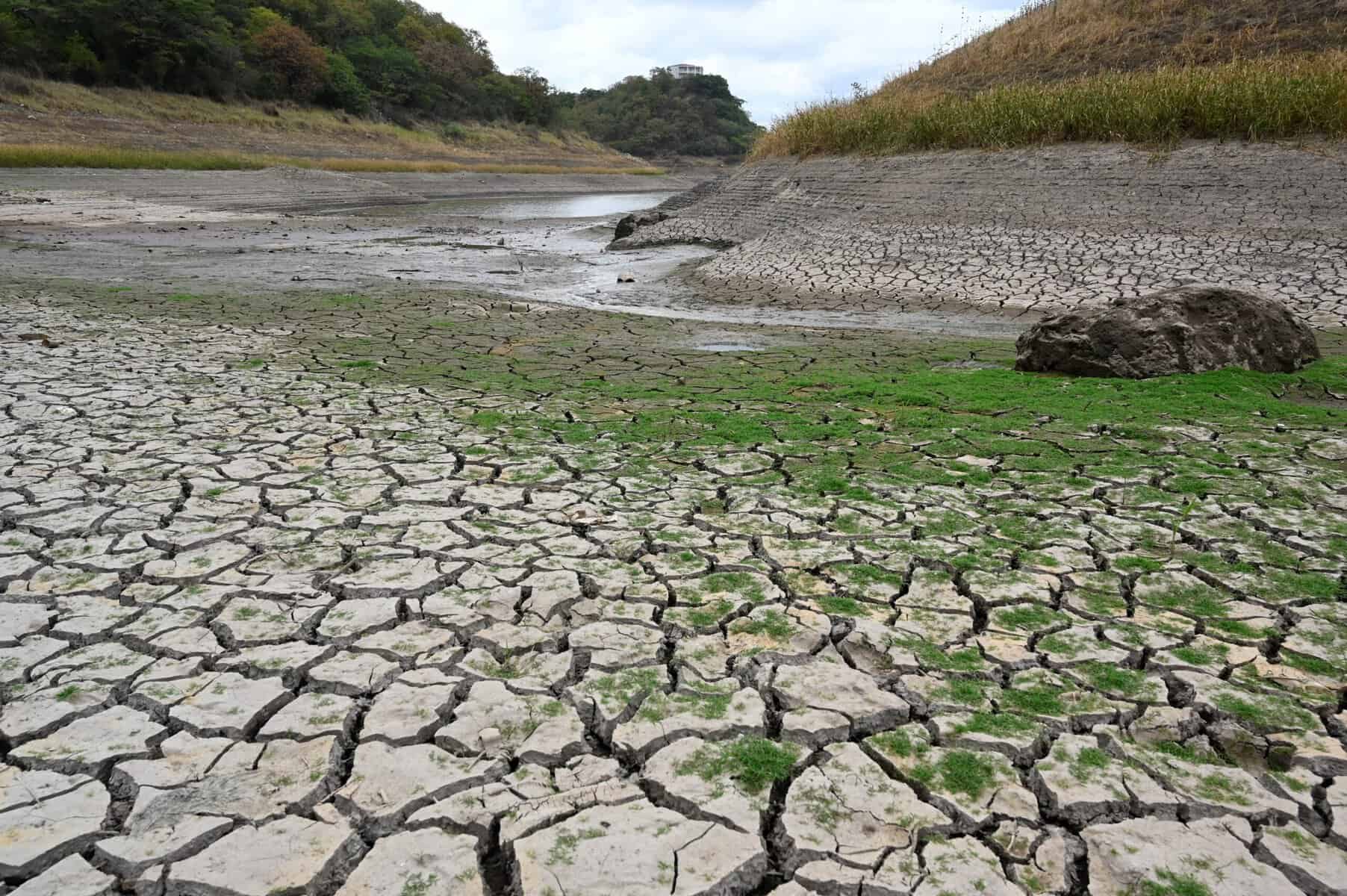
Drought caused by the El Niño climate phenomenon could leave 16 million people in Latin America without enough food, the regional director of the United Nations World Food Programme (WFP) said on Sunday. This naturally occurring weather phenomenon raises sea surface temperatures in the central and eastern equatorial Pacific, which can trigger changes in wind, pressure and rainfall patterns around the world.
“In this region, we are talking about 16 million people who will probably face food insecurity as a result of El Niño’s impact,” said Lena Savelli, WFP’s regional director for Latin America and the Caribbean. “It is a very worrying situation (…). It could be one of the strongest El Niño events in recent history,” added the UN official, who arrived in Honduras to monitor the drought’s impact.
The Central American country has kept nearly 80% of its territory under alert since August because of drought worsened by El Niño. Other countries in the region, including El Salvador and Panama, have declared emergencies to address the phenomenon. “For families who lose their harvests, their crops and their livelihoods, the impact will last a long time,” Savelli warned.
She added that one of the areas hardest hit by the current drought is the Central American Dry Corridor, an arid strip covering mainly parts of Guatemala, Honduras, El Salvador and Nicaragua that is vulnerable to extreme weather events. WFP began providing humanitarian assistance in Latin America in April in response to El Niño, distributing food rations and financial support to farmers. But “the needs exceed the funds we have available,” Savelli said.
The UN’s World Meteorological Organization warned in September that this El Niño could be “the most powerful” in four decades and would peak toward the end of this year, although its effects would continue well into 2027.