

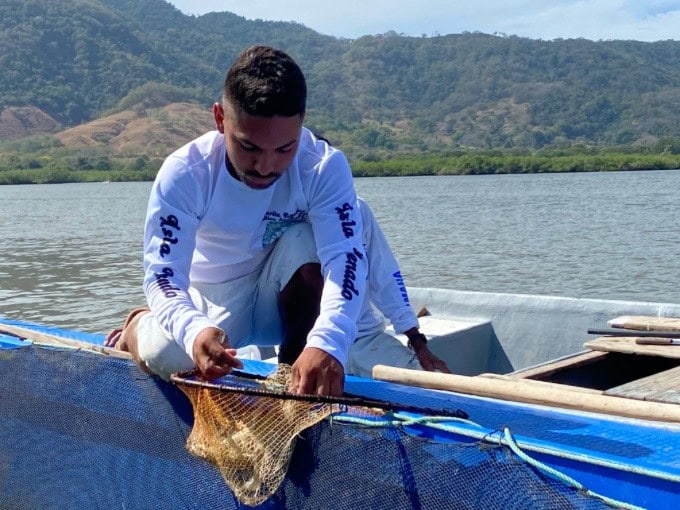
Costa Rica’s annual fishing ban in the Gulf of Nicoya begins May 1, closing one of the country’s most important fishing areas for three months as authorities seek to protect the reproductive cycles of key marine species.
The restriction will remain in effect until July 31, 2026, and applies to a defined area of the gulf running from Punta Torres, also known as Peñón, to the Isla Negritos Lighthouse, then east toward Punta Cuchillos on the Nicoya Peninsula and inland toward the line between Puerto Níspero and Puerto Moreno at the mouth of the Tempisque River.
The measure is designed to protect breeding and growth periods for commercially important species, including queen corvina, aguada and picuda, which are considered important to Costa Rica’s fishing economy.
During the closure, the Costa Rican Institute of Fisheries and Aquaculture, known as INCOPESCA, will coordinate with SENASA, the Ministry of Environment and Energy, the Ministry of Public Security and the National Coast Guard to increase monitoring and enforcement in the area.
Authorities said the ban is part of Costa Rica’s broader effort to promote more responsible fisheries management and protect marine resources that support coastal communities and the national food supply.
The regulation includes limited exceptions. Shellfish harvesting may continue for those with valid INCOPESCA authorization, while semi-industrial sardine fishing will be allowed from June 1 through July 31.
Fishermen with valid tourist fishing licenses and research permits whose approved operating areas overlap with the closed zone have already requested financial assistance through the Joint Institute for Social Assistance, known as IMAS, to help offset the impact of the temporary restriction.
The Gulf of Nicoya is one of Costa Rica’s most productive fishing zones, and seasonal closures have long been used as a management tool to give fish populations time to reproduce and recover. For fishing families, the ban brings a difficult pause in activity. For marine authorities, it is a necessary step to keep those same fisheries available in future seasons.
INCOPESCA said the measure is intended to maintain the balance of marine ecosystems while supporting the long-term survival of fishing activity in the gulf.





