
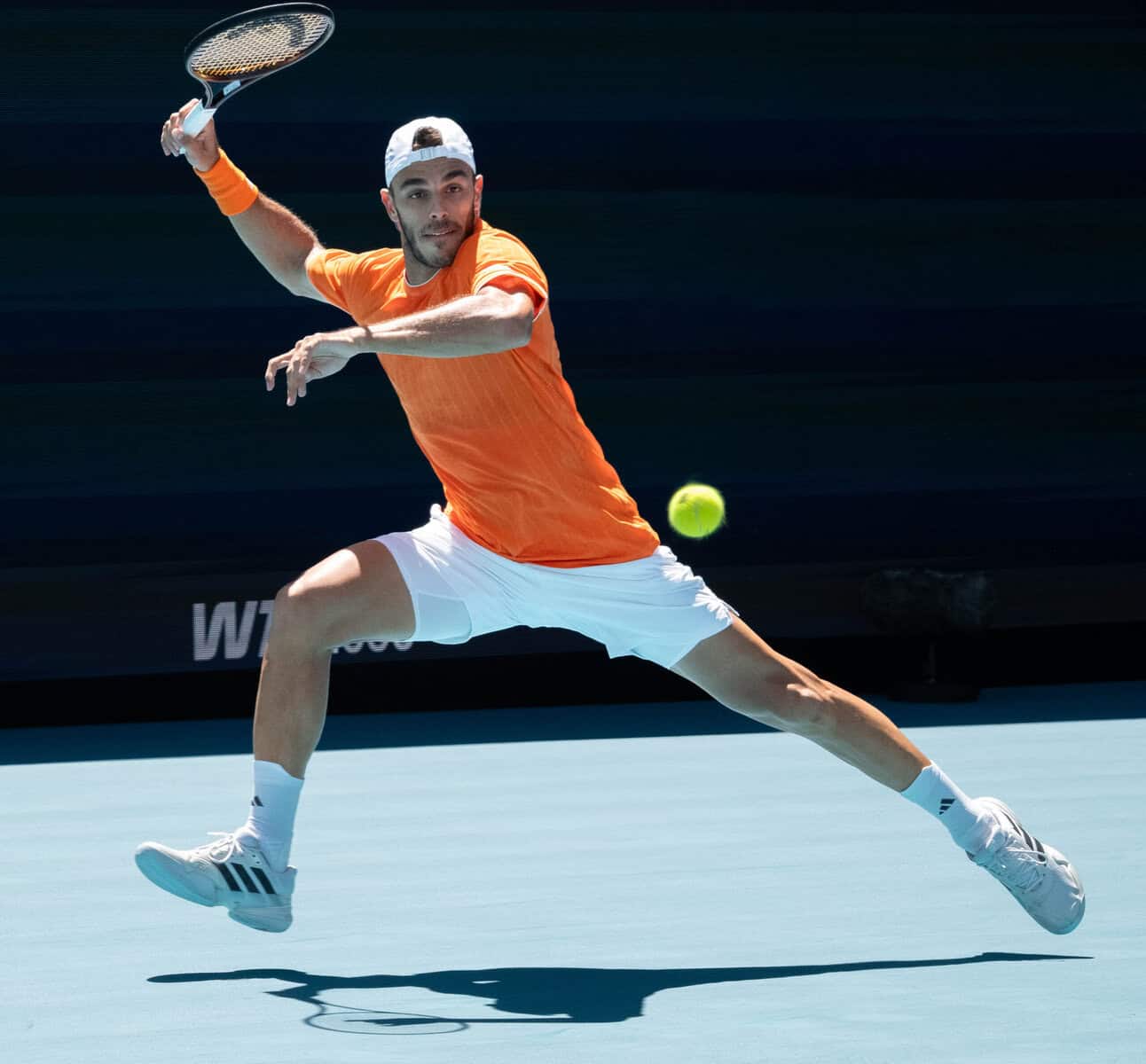
Latin America’s grass-court week at Queen’s has become a useful Wimbledon check for three players arriving with very different stories: Argentina’s Francisco Cerúndolo, Peru’s Ignacio Buse and Chile’s Alejandro Tabilo.
At one of the sport’s main grass warm-up events, the regional focus is split between Cerúndolo’s proven ability on the surface, Buse’s rapid rise after his Hamburg breakthrough, and Tabilo’s attempt to carry his recent Grand Slam form into the short grass swing.
Cerúndolo is the most established grass threat of the group. The Argentine, seeded seventh in London, already has a grass title on his résumé after winning Eastbourne in 2023. That result still matters because it showed that his heavy forehand, aggressive court position and return game can work outside clay and hard courts when he serves cleanly and gets forward earlier in points.
His Queen’s opener came against lucky loser Aleksandar Kovacevic, a dangerous first-round opponent because of his serve and flat ball-striking. Cerúndolo handled the assignment in three sets, 6-4, 6-7(5), 6-2, and moved into a second-round meeting with American Jenson Brooksby.
That is a very different test. Brooksby is less explosive than Kovacevic but far more awkward, with an unconventional game that can break rhythm and force opponents into uncomfortable patterns. On grass, where timing can already be difficult, Cerúndolo will need to control points early rather than let the match become messy.
Buse brings the freshest story. The 22-year-old Peruvian arrived at Queen’s only weeks after winning Hamburg, where he beat Tommy Paul in the final and pushed himself firmly into the top-50 picture. His first ATP Tour event on grass could have been a hard landing, but he found a way through.
Buse dropped the first set to Marcos Giron before coming back 3-6, 7-5, 7-6(8). The result was more than a first-round escape. It showed that his clay-court confidence is beginning to travel. Giron entered the draw as a lucky loser after Rafael Jódar withdrew, but he brought enough experience and speed to make the match a real grass-court test.
For Peru, Buse’s rise continues to carry weight. The country has had strong players before, but breakthroughs at the top of the men’s tour have been difficult to sustain. Queen’s now gives Buse a chance to show Hamburg was not a one-week spike and that his game can hold up when rallies are shorter, returns are rushed and service games move quickly.
Tabilo enters from a different angle. The Chilean is left-handed, athletic and dangerous when his serve lands and his forehand opens the court. He also comes into the grass swing after reaching the second week at Roland Garros, where his run ended against Felix Auger-Aliassime.
His first-round match against qualifier Rinky Hijikata is the kind of grass-court assignment that looks manageable on paper but can become uncomfortable quickly. Hijikata came through qualifying and has won matches at Queen’s before. Tabilo has the heavier game, but he cannot afford a slow start. On grass, one loose service game can decide a set before a favorite has settled.
Together, the three give Latin America a wider Queen’s storyline than usual. Cerúndolo is trying to build on grass credentials he has already earned. Buse is measuring a breakout season against a new surface. Tabilo is looking to turn recent Grand Slam momentum into a proper Wimbledon warm-up.
The draw will get harder fast. That is the point of Queen’s. For Latin America’s men, this week is not only about chasing points in London. It is about finding out which parts of their games will travel to Wimbledon.