
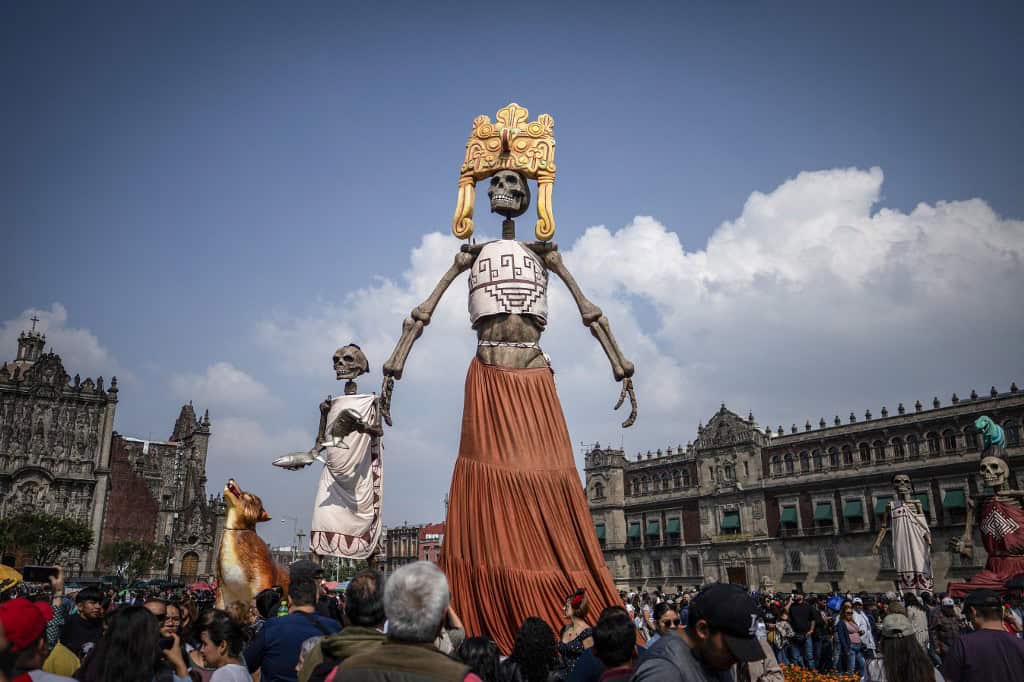
Flowers, skulls, skeletons, intimate moments, and memories: Day of the Dead in Mexico stirs emotions for those who are gone but is also a reason to celebrate. In recent days, millions have remembered deceased loved ones with traditional “ofrendas,” that is, altars with their portraits where objects they enjoyed in life are placed.
On Saturday, nearly one and a half million people attended a parade organized by Mexico City authorities, dominated by dancing skulls and skeletons, the famous “catrinas.” Here are some scenes of how the celebration was experienced.
Celebration of Santa Muerte
On Friday, dozens gathered in the Tepito neighborhood, a working-class area of the Mexican capital where devotion to Santa Muerte is practiced. The so-called “Barrio Bravo,” also known for being a violent area of the capital, houses one of the main sanctuaries to this deity, which is not recognized by the Catholic Church.
Santa Muerte is represented by a statue adorned with a scythe and a globe. Devotees come to ask for different miracles.
Among skulls and flowers
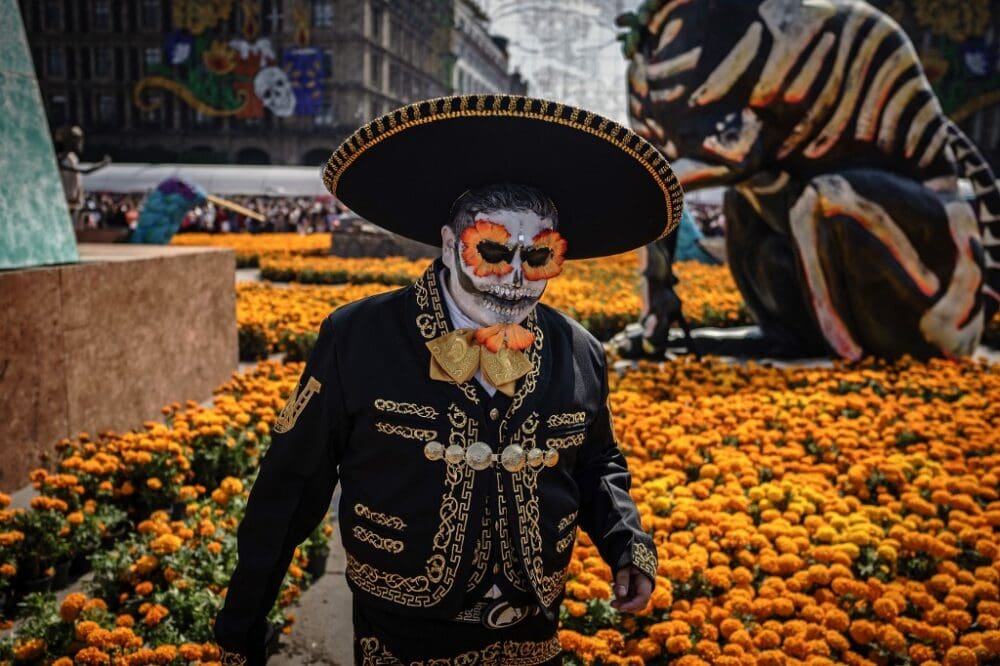
Mexico City authorities hold an annual Day of the Dead parade along Paseo de la Reforma, one of the capital’s main avenues. At this time of year, the city is covered in the yellow and orange of traditional cempasúchil flowers.
Colorful skulls and gigantic skeleton effigies parade down Reforma’s streets to mark the date. These images come from the so-called “Catrina,” a skull figure created in the early 20th century by Mexican engraver José Guadalupe Posada that has become the emblem of the celebration.
Intimate celebration
At the same time, thousands of families set up “ofrendas” to remember deceased relatives, either at home or in cemeteries. Traditionally, an ofrenda includes cempasúchil flowers and the portrait of those who have passed, as well as the music and drink they liked in life.
Votive candles are also placed, symbolizing the path for the dead to return home, and Pan de Muerto, a sugared sweet bread whose shape represents the skull and bones of those who have died.