

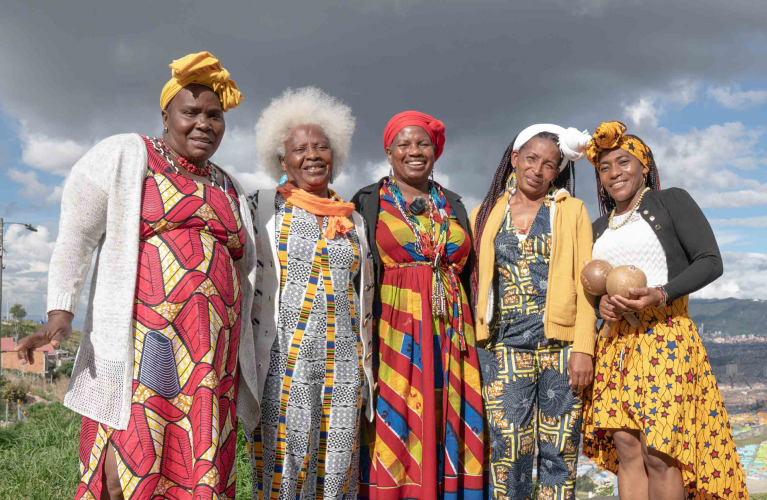
Songs and dances to worship the black Child Jesus and a Christmas celebrated in February: the Afro-Colombian village of Quinamayó celebrates this Saturday the birth of the Messiah as a cry for “freedom” against the slavery that prevented their ancestors from enjoying the December holiday.
The figure of the newly born with dark skin in a golden cradle is at the center of the festivities in this locality in the southwest of the country. For decades, women, men, and children dressed in traditional costumes commemorate Christmas two months later, in the style of their ancestors.
Before the abolition of slavery was enacted in 1852, they were forced to attend to their “masters” on December 24, tells AFP Lucidalia Balanta, one of the 60-year-old dancers.
“The servants served the masters, so they did not have that facility to celebrate the holiday (…). Later the slaves took it upon themselves to be conscious” and began to “celebrate Christmas in February as a symbol of freedom,” specifies her sister Dani, also ready for the singing and dancing demonstration.
Founded by newly freed former slaves, the village located in the Valle del Cauca department welcomes guests from other black localities scattered throughout the Pacific region.
Every third Saturday of February, they gather to move their bodies and sing songs that praise the black Child Jesus.
The first settlers arrived there escaping from the old estates where they were chained and subdued. One of the dances involves dragging the feet as if they were still bound, they share. “We also had the right to have fun, just as they (the enslavers) had fun,” adds Balanta.
The dancer shares that on December 24, the great date of Catholicism, children still receive Christmas bonuses and the traditional Christmas is celebrated, but in February the youngest witness what truly is their “music” and their “tradition.”
In Colombia, black communities (9.3% of the population, according to official figures) are, along with indigenous peoples, the main victims of the prolonged armed conflict, poverty, and inequality.
Hundreds of years after the end of slavery, the sisters applaud that Afro-descendants have gained ground in politics and culture, like Francia Márquez, who since 2022 is the first black woman to be vice president of the country.
Despite the peace agreement of 2016 that disarmed the powerful FARC guerrilla, confrontations continue in Valle del Cauca between rebels from other organizations and the public forces.
That issue is “complex,” says Dani, making a call: “This tradition emphasizes that, telling people that instead of doing what should not be done, it is better to support the culture.”





