

Guatemala’s indigenous peoples are organizing in a new political party to shift from traditional resistance to actually reaching seats of power.
The symbol of the initiative – called the Convergencia por la Revolución Democrática (Convergence for Democratic Revolution, or CRD) – is a multi-colored Mayan star that alludes to their exclusion, extreme poverty and ongoing violations of basic human rights.
Explaining the situation to The Tico Times, José Luis Siguil, a leader of the CRD and member of Tzuk Kim-pop – which translates to “Highland Peoples Interwoven” – said the new party is opening spaces for the country to make changes.
In a declaration issued in June of last year, the day the party was launched, the group stated the need to offer Guatemalans an alternative to the traditional sectors in this year’s upcoming general elections.
“We live in a complex situation,” Siguil said. “The state and the extreme right-wing party – the [ruling] Partido Patriota – have shown time and again that they will impose their economic agenda.”
“The indigenous peoples’ strategy isn’t any longer of resistance, but rather of taking the leap from resistance to power,” he added.
Siguil said alliances have been made between a leftist political party and social movements, “which we hope will have repercussions.”
“Guatemalans live in a “pseudo-democracy,” he said, because democracy implies, among other things, “the democratic exercise of voting [and] citizen participation, which in Guatemala doesn’t happen.”
Siguil said elections in Guatemala aren’t won with merit and capability, “but rather with money – the millions needed to buy power.”
“We always thought the fact that a former military leader directly linked to a series of events in the violent past of state terrorism … would have severe consequences,” he said, referring to retired Gen. Otto Pérez, the country’s current president.
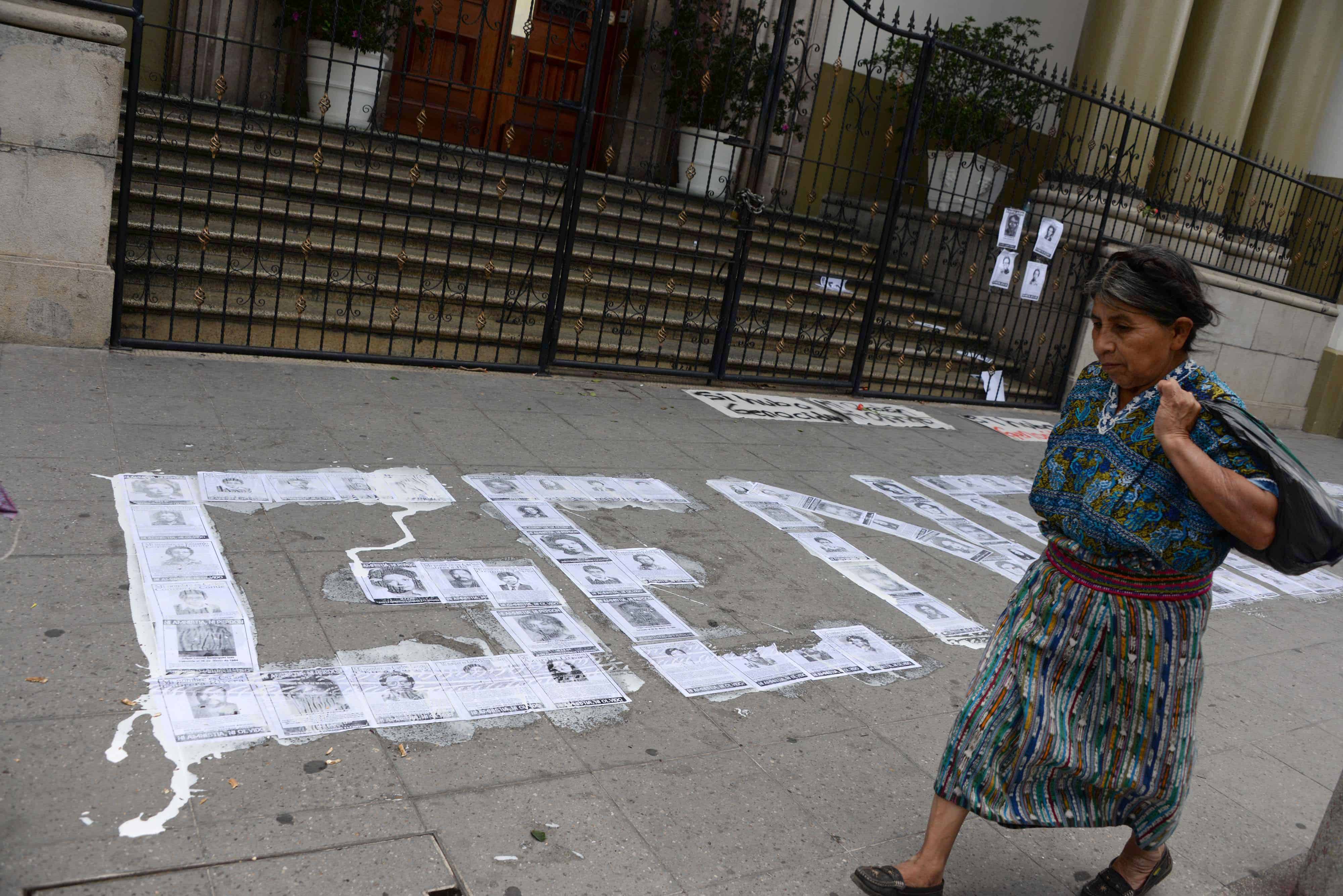
“We’ve seen how repression has worsened against indigenous peoples’ organizations and other sectors,” Siguil said.
“The heroes of Totonicapán are a clear example that in defending its territory, the state will act violently, and it will kill to defend mining, hydroelectricity projects, other megaprojects, privileges and monoculture,” he added.
Siguil referred to military repression against a demonstration in 2012 in the western city of Totonicapán, some 200 kilometers northwest of Guatemala City, the country’s capital.
‘We will impose peace’
The march was called by the Community Mayors – an ancestral Mayan community authority – of the 48 cantons in the department of Totonicapán, to protest against a rise in electricity costs and other issues.
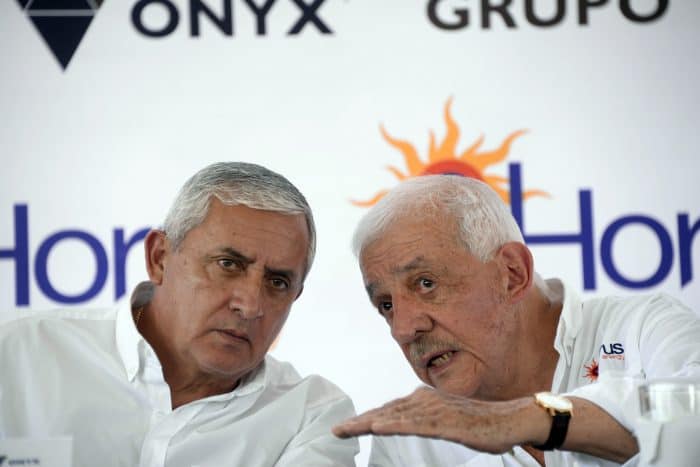
Pérez Molina – who has been accused by human rights organizations of committing human rights violations during the 36-year Guatemalan internal war – was quoted as warning the local population “to return to peace, or we will go in to impose peace.”
The lengthy Guatemalan conflict was one of the internal armed struggles in the region that came to an end as a result of negotiations within the framework of peace agreements in the Procedimiento para Establecer la Paz Firme y Duradera en Centroamérica, or the Procedure to Establish Firm and Long-Lasting Peace in Central America.
The signing of the document on Aug. 7, 1987 in Guatemala led to the end of the wars then being waged in Nicaragua (1982-1990), El Salvador (1980-1992) and Guatemala (1960-1996).
In its first declaration last year, the CDR stated that it was founded as an initiative by different indigenous and other civil society organizations, and political parties after what it described as a long process that analyzed the country’s political, economic, social, cultural and environmental situation.
These organizations “reached the conclusion that there was a need to offer the people an alternative in order to participate with dignity in the next election and compete with traditional sectors for popular posts and popular power,” according to the text.
Under the title “Democracia y buen vivir para todos” (“Democracy and good livelihood for all”), the CDR said that Guatemala’s present political, economic and social situation “demands real, strategic thinking inside all political expressions struggling to change our country’s social, economic, political and cultural model.”
In turn, this demands bringing together “the most varied anti-oligarchic and pro-democratic forces now fighting in a scattered way to defend indigenous people’s identity and rights, or the social achievements the neo-liberal model ended,” it said.
In an exercise of self-criticism, the organization admitted that leftist political and social forces “have been incapable of overcoming particular interests,” and “there is not a single revolutionary political project uniting us.”
The group defined its short-term aim as having representation in Congress and municipal government. To achieve this goal, it established five points: a realistic and transformational government plan; suitable, prestigious candidates with social and political backing; broad national and local alliances; coherent public administration plans; and a legislative agenda in favor of Guatemala’s social majority and indigenous peoples.
With its population just over 16 million – eight million of them registered voters – Guatemala is gearing for general elections this year. On the second Sunday of September, voters will elect a president and vice president, 158 members of the single-chamber Congress, mayors, members of 337 local governments, and the 20 Guatemalan representatives to the 120-member Central American Parliament, headquartered in Guatemala.
According to recent polls, of the seven presidential hopefuls for the 2016-2020 period, Manuel Baldizón, of the center-right Libertad Democrática Renoviada (Renewed Democratic Liberty, LIDER), and Alejandro Sinibaldi, of the ruling center-right Partido Patriota (Patriot Party, PP), are favorites.
LIDER – whose acronym is the Spanish word for “leader” – is the main opposition party in Congress, while the PP – whose members define themselves as “patriots” – has the highest number of mayors nationwide, with 139 of a total of 334.





