
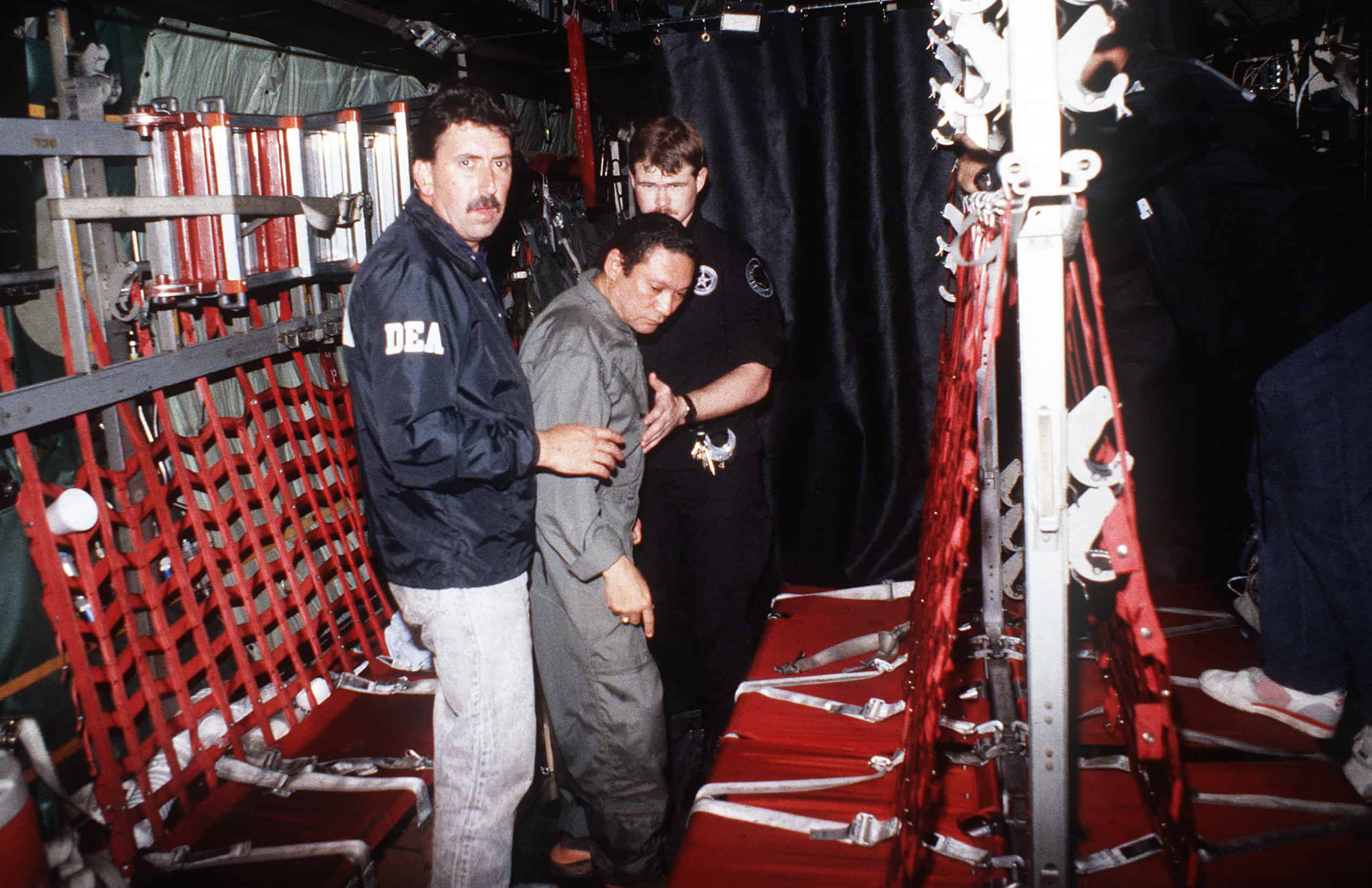
PANAMA CITY – Like a country boy who moves to the city to take a suit-and-tie job, Panama is trying hard to overcome its unsophisticated past and prove to others that it can hang in the boardroom. Since gaining control of the canal from the United States on Dec. 31, 1999, Panama has matured from a U.S.-protected backwater into a fiercely independent and cosmopolitan nation. It consistently turns record profits on the canal and has quickly styled itself into a modern, international hub for commerce, logistics and finance.
President Ricardo Martinelli has stated his government’s goal of making Panama a “first-world” nation by the end of his term. Long gone seem the dark days of dictatorship under Gen. Manuel Antonio Noriega, who ruled the country behind reflective sunglasses from 1983-1989, terrorizing the opposition with paramilitary groups known as “Dignity Battalions.”
Though many Panamanians clearly remember the repressive regime and the tensions that culminated in the massive and brutal U.S. military invasion in 1989, that too seems like a strange nightmare detached from the waking reality of modern day Panama.
So for many Panamanians, the sudden prospect of Gen. Noriega’s return after 20 years tucked away inside a U.S. jail cell, has come as an unwelcome reminder of their country’s banana-republic past.
A recent straw poll in the daily La Prensa showed most Panamanians don’t want the 76 year-old former dictator to return, despite President Martinelli’s promise to request his extradition from France this week. And some Panamanians privately worry that Noriega, despite his advanced age and ailing health, will seize control of the country again if brought back home.
“Noriega specializes in coups,” warned a local taxi driver, who worries the former strongman maintains “camouflaged” support within the power structures of Panamanian society. Analysts say there’s a residual fear of Noriega, even if outdated.
“The United States created a monster called Noriega at the end of the 1980s. There are still some who are afraid of that monster,” said University of Panama sociology professor Marco A. Gandásegui. For other Panamanians concerned about rising citizen insecurity and violent crime, there’s a nostalgia for Noriega and his ironfisted ways.
“When Noriega was here, there wasn’t insecurity,” said Noriega supporter and street vendor Andrés González, 73, who maintains a modest public shrine to his comandante. González says he doesn’t think Noriega plans on returning to power, but claims a lot of people would like to see that happen.
“I don’t think it’s his intention, but if the people want him back in power, what can he do?” González said with a shrug. Those who worked closely with Noriega in the past claim a political comeback is unrealistic.
“His political life has diminished; he’s old and sick,” José I. Blandón, Noriega’s top political advisor in the 1980s, told The Nica Times this week. “Those who supported him in the past have either moved on to get jobs as lawyers or professionals, or they are old like him.”
Others note that Noriega’s power came from being the head of the Panama Defense Forces in the 1980s, and not from any natural leadership skills or political charisma that he could ride back into power.
Blandón said Noriega’s possible return to Panama would not be cause for any “political trauma.” Like water through the canal, Panama has moved on and is “not nostalgic for the past,” he said. “The U.S. remembers Noriega more than Panama does,” Blandón added.
The Importance of Law
Noriega’s Panamanian defense attorney Julio Berrío is among those who have no nostalgia for the days of his client’s de facto military regime. In fact, when Noriega was in power, Berrío was jailed five times for acts of dissidence.
Still, the rumpled-suit lawyer has become the leading advocate for Noriega’s repatriation. Failure to bring him back, Berrío said, reaffirms Panama’s “banana republic image” and sets a very dangerous precedent for relations with the United States.
Berrío said that Panama, a small country with no military, must defend the principles of international law for the sake of its sovereignty and long-term survival.
The lawyer argues that Noriega’s surprise extradition to France instead of Panama violates a series of international laws, including the Geneva Convention (TT, April 30).
If Panama doesn’t do everything in its power to appeal that decision and bring Noriega back to face murder charges in Panama, the country is essentially “ceding part of its sovereignty to the U.S. and allowing the great power to the north to throw our bilateral treaties in the garbage,” Berrío charged.
“No country can cede its principles to a great world power,” Noriega’s lawyer told The Nica Times in an exclusive interview last week in Panama City. “Our government is not looking at the consequences of violating international treaties. If we violate one treaty today, tomorrow we violate another. And tomorrow (the U.S.) could violate the Canal Treaty.”
Berrío added, “A country like ours has to defend the principles (of international law) jealously, not because it has to do with a certain person or a certain situation, but because if we allow a world power (to violate the law) tomorrow they are going to commit another series of violations because they think we are nothing more than a banana republic.”
Even though President Martinelli said his government will request Noriega’s extradition from France, Berrío doubts the president’s sincerity. He also doubts that the Panamanian government will be able to file its request in time for Noriega’s next courtroom appearance in France, on May 12.
“We should have closed this chapter of our history already, rather than just waiting to see what is see is going to happen in France,” Berrío lamented. Having Noriega remain abroad, he said, “just prolongs the agony of a definitive solution to this issue.”
Part II in a two-part series on the extradition of General Manuel Noriega